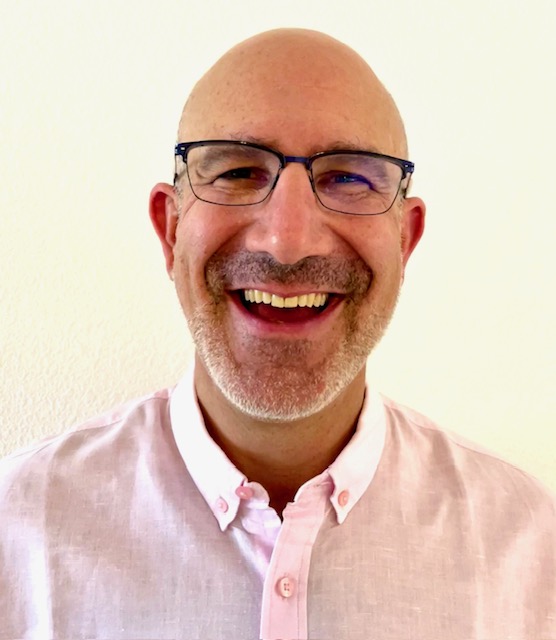
Episode 78: Engagement for the TikTok Generation

Austin Levinson joins the podcast to discuss the ongoing engagement crisis in education and why the solution isn’t simply “less technology,” but more intentional, student-centered learning. Drawing on design thinking and project-based pedagogy, Austin argues that real engagement involves active participation and that educators should prioritize empathy for student needs over rigid adherence to curriculum.
The conversation also explores healthier approaches to assessment—emphasizing feedback over constant grading—and more meaningful reflection by capturing learning moments as they happen. Finally, Austin introduces immersive simulation-based learning through Megaminds, where students practice communication, critical decision-making, and career exploration in low-stakes, AI-driven scenarios, helping them build confidence, persistence, and agency.
In this episode, we sit down with educator and immersive-learning leader Austin Levinson to explore what it really takes to spark student agency in an era of instant gratification and shrinking attention spans. Austin shares how his own path—from early loves of puzzles and games to a career shift into gifted education—shaped a philosophy rooted in “fidelity to student needs,” not just fidelity to the curriculum.
Together, we unpack why engagement has been a challenge long before smartphones, what authentic engagement actually looks like in classrooms, and how design thinking—especially the often-skipped empathy phase—can help learners create work that matters to real audiences. Austin also offers a practical reframe for educators: everything needs feedback, but not everything needs a grade, and reflection works best when students capture “aha moments” in real time.
We then dive into immersive, simulation-based learning through Megaminds, where students step into realistic career scenarios—like a healthcare triage simulation—interacting with AI-powered characters to practice critical thinking, communication, and decision-making in low-stakes environments. Along the way, Austin discusses formative assessment insights teachers can use immediately, the promise of “simternships” for career exploration, and how to keep humanity at the center of learning by reconnecting students with tangible, passion-building experiences beyond the screen.
Want to learn from Austin? Here are the links:
Steve, M.Ed. (00:23)
Hey friends, welcome back to Under the Hat. We're sitting here in episode 78 and we're here to talk about many things, but one of which is going to be engagement. As always, I'm your co-host, Steve Martinez, and I'm joined by...
Sophie, M.Ed. (00:40)
Sophie, your other co-host. Hi, Steve, how you doing?
Steve, M.Ed. (00:44)
I'm doing quite well, Sophie. The one thing that's top of mind for me right now is, so I was out of the office at work for about a week. And then when I came back, it kind of reminded me of when I was gone in the classroom, right? So you leave the subplans and sometimes you come back and you have to regroup everyone. You have to reevaluate the engagement. Engagement looked different while you were gone. And it kind of got me thinking, I'm like, so...
Sophie, what were your kind of tips, tricks, kind of things that you did with subs, for subs while you were gone?
Sophie, M.Ed. (01:24)
really tricky because I was a math teacher and a technology teacher. it's like, I, it was really rare if I could actually leave something for them to teach that was new because middle school math, not a lot of people are confident in that. And then the types of technology and projects that we were doing, not a of people are comfortable with that. And then I also taught science, middle school. And so like it was those topics, people are not really comfortable unless they are.
Steve, M.Ed. (01:35)
me.
Sophie, M.Ed. (01:51)
because I'm a sub now. So I'm going into a middle school science classroom in a couple weeks in a middle school math classroom and to be a sub. I've already reached out to the teachers because this is my old district. I know them. And I'm like, you don't have to stop teaching. Like I'm certified to teach this. I've taught this. I know what we're doing. So I like when I was preparing for a sub in my classroom, I tried to make things really basic, really easy. And, but also tried to
move the needle in some way. ⁓ Also knowing that it was probably going to be rare sometimes that I even got a sub so my kids would just be split up amongst my peers during the class period with them. yeah, so it sort of was like this juggling like, I going to have a sub? I going to know what my kids are going to do while I'm gone? Or is it just going to be like one of those things where they just go and get another round of math that day or another round of ⁓ science or like.
Steve, M.Ed. (02:32)
⁓ which is fun.
Sophie, M.Ed. (02:49)
They have PE twice or whatever. I don't know. ⁓ But as a sub myself, ⁓ I understand that there are things that other subs might not have a whole lot of experience. Maybe they're fresh out of college and they don't have a lot of experience in classroom management. Classroom management is literally what you do all day as a sub. That is it. Is just managing the kids and trying to get them to stay on task with the worksheet or the reading that they.
have asked you to have the students do. ⁓ And so with me knowing the teachers and knowing like the subject areas, I think I'm honored that they trust me enough to teach in their classroom while they're gone. And I'm pleased to have that experience again. And mostly fourth grade up, I have discovered that while I am certified to teach elementary, yeah, nope, there's someone better than me for them in those lower grades.
⁓ But again, it's also it's not the same as it would be if their teacher was in there like they have that rapport they have that ⁓ Those routines they are they have access to the internet like they can do more Than a sub coming in can do Sorry, that was sort of long-winded
Steve, M.Ed. (04:07)
Yeah, 100%. No, that's good.
That's a good ramble. Because part of that is the like, engagement piece, right? And so like looking at what engagement could look like when you're in the room, when you're out of the room, what kind of engagement experiences can you leave when you do have to be awake? Because that's just the reality of conferences, being sick, all that good stuff. So, all right, Sophie, let's dig into this. What are we doing today?
Sophie, M.Ed. (04:35)
top of mind for us today is today's guests. I first met Austin two years ago at FETC when he sat in on one of my sessions. He humbled me with his kindness afterwards and we've been connected ever since. Austin Levinson is a classroom teacher turned ed tech strategist who specializes in the messy human centered side of innovation. He's an expert at engineering productive struggle.
helping students navigate frustration and ask better questions rather than looking for the easy way out. Yes, love that. Whether he's designing AI, human partnerships, or building frameworks for critical thinking, he keeps student agency at the heart of his work. Austin, we are so glad that you're here. And for those in the audience who haven't had the pleasure of meeting you yet, could you tell us a little bit about your educational journey?
Austin (05:24)
Well, first, thank you for having me. Pleasure to meet you, Steven. Pleasure to see you, Sophie, as always. ⁓ Educational journey, wow. Well, it started with some of my experiences when I was younger. I grew up in a house ⁓ in which critical thinking, puzzles, playing Scrabble by Candlelight when the power went out, that was part of my childhood. Games Magazine, if anybody remembers Games Magazine, my sister and I would search for the hidden contest.
Steve, M.Ed. (05:43)
You
Austin (05:51)
in games magazines. think it started then where I was just, ⁓ I think I was exposed to massive amounts of curiosity, critical thinking, puzzles, games. And my mother was a sculptor, so I used to watch her for hours in her studio with her acetylene torch making different belts and other mirror type things from sheet metal and posts. So think a lot of my...
early experiences influenced me in deep ways to have that kind of ingrained in me. That's something I hope we're going to have a chance to get into it because I think that we're there's some of that missing right now with with some of our youth. But again, I think we'll get there. ⁓ I was I studied economics and worked in business for a short period of time and quickly found that I ⁓ did some travel and my values.
were finally aligned with who I think I really was and my true calling, which was education. I worked in California for a few years, eventually moved overseas and got a master's degree in education, a specialization in gifted and talented. When I was working in elementary school for many years, I was always a bit of a disruptor. I didn't know that term yet, but I was always incorporating a lot of critical thinking and steam. I remember a seminal moment in my journey.
was when our literacy coach said, fidelity to the curriculum. And I waited until the right moment in the right audience because I want to ruffle feathers. And I said, fidelity to student needs.
And I think that anybody who is blindly following the curriculum, it's not, I Lucy Culkins did some great work. There's obviously been back and forth with her work, but she's not the gospel. And she has obviously a lot of great things that she offered. And so does every program. But we always need to pay attention to the human side. And I think that that was a big moment for me. Subsequently moved into gifted and talented education. And I was getting involved with a lot of design thinking, problem-based learning and project-based learning.
and giving students a lot of agency. The problem-based learning piece, they were medical entomologists trying to figure out what was wrong in a community that turned out to be West Nile virus. They were ⁓ game designers in a game company trying to add variations to different games. So that's a little bit of my path. I eventually got into some pretty deep AI projects.
in which the students had a lot of say in how they were using ChatGPT and at the time Mid Journey to create some aspects of a screenplay about a futuristic AI film. And then that eventually led into my becoming director of learning at Megaminds, which is an immersive learning platform that's all about student agency and productive struggle.
Steve, M.Ed. (08:40)
Sorry, I'm now just googling Megaminds now, so I apologize.
Sophie, M.Ed. (08:41)
dancing.
Austin (08:44)
No, no, there's a lot there. I'm still all about critical thinking, creativity, student agency, and I'm all about what's best for students. That's where I am and I've always been and always will be.
Sophie, M.Ed. (08:57)
And there's that gamified vibe throughout all of it, it feels like. When you were talking, I was like, it's games, games, games. ⁓ Which I too grew up playing card games and board games, and the board game Clue was one of my favorite games of all times. ⁓ And could never do Scrabble. I'm terrible speller. ⁓ But yes, they... ⁓
the vibe of games and engagement and there's more than the process is.
top of mind, sorry.
Steve, M.Ed. (09:39)
No, Austin, just love anytime I come across someone that has experience with design thinking. I absolutely love because I did a lot of design thinking in my own classrooms and every time I talk with someone, I learn so much because like you can just do it in so many different ways and go about it in so many different ways. Like ⁓ I taught econ, so this may resonate with you, but like, you know.
I first leaned into design thinking in the high school economics context. ⁓ But kind of like what I'm hearing of kind of your angle or maybe one possible angle was like almost like creating, I don't want to say ⁓ simulations, but like kind of like putting them in different scenarios where they're like, they're engaging with design thinking versus how I did it, which was more of like they're solving the real world problem.
⁓ in their community, not to say that you did not do that, but like part of it I feel was like, ⁓ you are a developer in some way or you are maybe a CEO in some way and you are now like solving something that may be not as real life in terms of the scenario with them at that moment, but you are positioning them to be in a real world setting that they may encounter later on in life.
Austin (11:03)
And the answer is yes and yes. I think I've done a lot of both and I see a lot of advantage. I I was speaking a little bit about problem-based learning, a subset of project-based learning in which there are actual stakeholders, but then there was a lot of work I did in design thinking where they really spent a lot of time in the empathy piece, which I think some people choose to skip. I've worked with several projects where I've seen people skip it and even PBLs where I've said, you know, the empathy piece could really.
Steve, M.Ed. (11:07)
cool.
Mmm.
Austin (11:29)
help connect us to the audience and different stakeholders at an early stage. And I think that that becomes a through line throughout design thinking projects that becomes a really key piece that continuing to look at different perspectives of different stakeholders.
Steve, M.Ed. (11:42)
Yeah, I mean the empathy piece for me and I say this to teachers that I train but also with my actual students is like to me that was the most important part. Right? And like you don't have that insight of your audience of your stakeholders of the people that are deeply impacted by set problem. It's going to be really hard to solve something when you don't have the pulse on a more human level.
Austin (12:09)
An audience, audience we think about as writers, as content creators, as photographers, as chefs, as many of the things that we like to do, different people have different interests, but considering the audience is always going to be something that will help to please people and really connect with people. And I think that's a great piece. And I'm big into photography.
And I think about the storytelling piece. I'll be actually presenting a macro photography workshop with Thinkering Collective coming up this next week and talking about how that storytelling piece relates to ⁓ our human side and our connected side with the environment, with the people around us. The audience piece is so important. I agree, Steve.
Steve, M.Ed. (12:48)
Yeah, I love that. ⁓ So talk to us a little bit about, so like we have, as you mentioned, Megaminds. I wanna make sure that we have ample time for you to talk about that, share what you have with that. This is my first time even Googling or searching it by you mentioning it. So I'm super excited. I know we're super excited to hear more about it.
Austin (13:12)
Before we get there, because I feel like there's some things that we spoke about and some things we indicated we're going to talk about, I think it's an important kind of preamble. think that there actually I don't think there's an engagement crisis in passions for youth right now. And let me let me me flesh that out a little bit. A parent of a student a few years ago said to me is about four or five years ago, I'm trying to help him develop some interests and he's just not really interested in anything.
Steve, M.Ed. (13:29)
Mmm.
Austin (13:40)
And ⁓ someone close to me said, well, it's a sign of the times with technology. And I'm not anti anything. And I don't think you guys are either, we need to be pro and proactive in pro things, proactive in developing interests and hobbies and exposing youth to different things. And so like one example, my father introduced me to Ikebana, right? And I have a book, this crazy thing called a book. And so you know what, there's still actually benefit
to looking at pictures, right? And so I think that, you when we take a lot of pictures ourselves, there's a benefit to printing them out. And that can spark interest. But I I'd love to hear from both of you as parents and as humans and as educators, what do you see in terms of disengagement in passions and hobbies and development of that? Do you think it's a crisis?
Steve, M.Ed. (14:17)
Mm.
yeah, yeah. I mean, I float into classrooms often. I work with pre-service teachers that are getting into the classroom for the first time. like hearing a lot of like what their pain points are almost 100%, almost 99.9 % of what they're struggling with or what they're feeling, it comes back to engagement or lack thereof, right? And...
Part of it I feel, and it's something that Sophie and I talk a lot about, part of it is just the system. Part of it is the infrastructure that had been laid out for these teachers. And it does feel like an uphill battle. And people talk about, it's the cell phones, or it's the screen time. I'm like, y'all had engagement problems well before then. And so to me, think it's now, it seems bigger. It seems more of a deal. ⁓
Sophie, M.Ed. (15:29)
Yeah.
Steve, M.Ed. (15:36)
⁓ But I think, yes, it is a crisis and it's something that's not new.
Austin (15:42)
One. ⁓
Sophie, M.Ed. (15:43)
I agree.
And then there's also the different perspectives of what engagement is. Because you walk into a classroom and one teacher is like, ⁓ my kids are fully engaged because they're sitting in rows and they're silent. And then you go into another classroom and yeah, my kids are completely engaged and they are talking and moving and collaborating. ⁓
I feel like the second one is actually more accurate of them being engaged in the learning and the conversations. But yeah, it's the perspective of the teacher, what they think engagement is. And then also what the kids, like asking the kids what's going on. I don't really have, it's active.
Austin (16:32)
Well, engagement's active. Engagement's active. It's
not passive.
Sophie, M.Ed. (16:36)
Yes, to be engaged, have to be actively, like you could be actively listening, you could be actively doodling, you could be actively taking notes. It has to be some sort of active participation in order to be engaged. And sometimes the teachers are like, well, I'd have to put on like a pony show so that they actually pay attention and that they're engaged. I'm like, no, but.
Changing the tone of your voice a little bit could help you like You don't have to be monotone the whole time ⁓ So that is a conversation because I used to be a coach after I was a teacher I was an instructional coach and then I said some conversations that I had with him. I'm like Do you want to sit in lecture like sit through a lecture that whole time? I'm like, do you want to have a conversation? Do you want like what's the best way for you to learn because? You're only giving your kids one way
Austin (17:32)
But if we jump
forward, if we jump forward, just as one example, into the CTE space and career exploration, and I've been involved with this world now for a little over a year, and I've heard people talk about career exploration. And let's look at that word, explore. And how does that relate to active versus passive? And how does that relate to engagement? Right? Our students who are watching a video of a nurse say, help people and do different things. And this is the environment I work in. Is that engagement? Is that exploration?
Sophie, M.Ed. (17:46)
Mm.
Steve, M.Ed. (17:53)
Thank
Austin (18:02)
Or is it some level of passive consumption? I connect that to what one of my seventh grade son's classmates said to him is, TikTok and chat GBT are my best friends. How does that relate to engagement and to exploration?
Sophie, M.Ed. (18:16)
because it's completely tailored and customized when you can go into TikTok, your algorithm is completely customized to your interests and your ⁓ passions. then ChatGPT learns who you are and then starts communicating with you with your language. ⁓
Austin (18:38)
But there's a passive
aspect to TikTok. And if students are being hit with 173 30 second TikTok videos per day, how is that impacting their brain? And we've read and learned about brain rot. And how does that impact their ability to then engage in a passion to develop interest, to explore careers, to develop ⁓ hobbies like cooking, like photography, like robotics.
Sophie, M.Ed. (18:51)
Yeah.
The thing with TikTok is like there's an immediate gratification. And in order to actually, I'm not embarrassed to say that I'm not a great cook. ⁓ so like in order to get better at cooking, you have to cook and I don't. And so like, I'm not going to get any better and it's not going to become like a fun thing for me because I don't do it enough to get that gratification from.
Steve, M.Ed. (19:19)
haha
Sophie, M.Ed. (19:37)
it. A very similar situation for me was I was trying to learn how to crochet with my grandmother. It didn't work in the first... I tried. I did. I tried. I still wasn't working in like 30 minutes. That first even hook or whatever wasn't working. And I was like, that's it. I'm done. Never picked up the needles again or whatever they're called because I never did it again because I struggled for so long and there was no success in that time. ⁓
And if you don't have any success, just like I haven't really had much success with my cooking, then you're not going to continue engaging and it's not going to become a passion. sorry, I was sort of a anyways.
Steve, M.Ed. (20:21)
I I feel like a lot of what we're hitting on is ⁓ is a session that I run often and Austin just a little bit of context like When I would do sessions that on the title would say design thinking The the turn up like people that would turn up to that session were like really low So like wait, they don't even they're confused by it. don't like it. So I kind of changed it to ⁓ passion-based learning and My numbers went up
like three time, three fold, like they just, they would just show up and it was still design thinking, but it was one of those things where like, look, we put this emphasis on curriculum first, right? On the standards first. But if we were to just reframe it to where we just ask students the right questions about their passion, that changes everything because they're conditioned to
answer answer answer questions, but we don't really teach them how to ask their own questions relative to What they truly care about ⁓ and to me that's something that you're really hitting on here
Austin (21:29)
But it's terrifying for many teachers. And I think in our careers, there are moments it was terrifying to relinquish control of the outcome. so PBL, design thinking, we don't necessarily know where they're going. Now, I think that, I mean, what I hear you both saying, I completely agree with. There are definitely aspects of it related to compliance and curriculum. I think that cell phone and technology and whether we're modeling a conscious or intentional use of it.
Sophie, M.Ed. (21:38)
Yes.
Steve, M.Ed. (21:58)
Mm.
Austin (21:58)
An article
I read recently that I posted about was a Yale student who was talking about how in her seminar class, there were many students who, as soon as the professor would give a question at their early juncture in the class, they'd be scrambling on their LLM to find out what would be an intelligent answer. And she found the homogenization and everyone started to sound the same. So there wasn't a modeling or a culture around when and if and how. And I think that that carries through to ⁓
how we engage in a project, right? ⁓ you can choose your product. And how many students at this point are going to go to just Canva or Google Slides, right? Because it's easier. And so I think that there is a component of ⁓ passive consumption. There is a component of cell phone use. There is a component of compliance. And then on our end as educators, how can we model curiosity getting out of our comfort zone being messy? I think that there's a mix of some of the challenge.
but also some of the pathway towards solutions there. ⁓ And that's why I'm offering a macro photography and storytelling class for educators. What? Well, but that could be incorporated and fused into any project. People can be, the intrinsic motivation for photography, would say with 99 % of population, a large percentage of students is going to be very high, right? But there's tons of critical thinking and ⁓ creativity incorporated there.
Steve, M.Ed. (23:23)
I just love the photography looping with all that because we're at a point now where like almost every human has a pretty good camera in their pocket. Like it's not like back in the day where you're like, ⁓ you had to purchase a really nice camera to get something or a camera, right? Like it's just a part of our lives. I just really appreciate that.
Sophie, M.Ed. (23:50)
And one of the first things that even like my boys are six and eight right now, their birthdays are very soon. And they, one of the first things that Xander learned how to do was how to take a picture with his tablet. ⁓ And when he then realized what he was actually doing, he now fills up my photos with all the pictures of him and what he's doing and like around the house. And sometimes it's a random of his foot and, but it's
peek into his life, so I love it. going back to something, I just wanted to say that, but then going back to something that you mentioned, was like modeling curiosity and growth. There are so many teachers that are terrified to model a growth mindset. They want their students to have a growth mindset, but they don't want to appear like they don't already know everything.
Austin (24:44)
God or goddess complex, I don't know, the sage on the stage, I'm not sure what's involved there. I think there's humility involved. It's tough, it's not easy to do that.
Sophie, M.Ed. (24:44)
and
And that's, so that's something that holds them back, like not knowing what the outcome is going to be because they want to know, or they want the grading to be easy on them. So like a multiple choice can be like auto graded type of thing. ⁓ But if I've learned anything from Steve and our ⁓ friendship over the years, it is that not everything ⁓ has to be graded outside of instructional time.
like your time with them, you could be grading, giving feedback and providing them like while they're literally in the room with you and like, and like that's their grade. Or like you'd be using the rubric with them right there.
Austin (25:38)
Why
would I teach it if I'm not going to grade it? I had a colleague ask that in a grade level meeting a few years ago.
Sophie, M.Ed. (25:48)
I feel like I've been told this and I'm wobbling on it a little bit. Everything needs to have feedback, but not everything needs to be graded. And I would even say that not everything even needs to be feedback. Sometimes it's just for them to explore now that I'm growing more. What Steve?
Steve, M.Ed. (26:09)
Because like there's this difference right between grading and assessing There's a difference between like I am supporting my students through let's say like an MTSS type of approach where I'm meeting with them in small groups, right and I'm documenting the heck out of that but that They are growing in that moment. I don't want their their authentic growth to be in a grade book
I want more of like end product, like I now have mastery aligned to the standard or to the skill. I want that to be in the grade book. And oftentimes grades are super arbitrary as a result, right? Because we feel like every single thing needs to be in a grade book, every single worksheet, every single moment of compliance back to that. what is, is that a true measure of what they know?
Austin (26:53)
you
And where does metacognition and reflection fit in?
Steve, M.Ed. (27:08)
Right, right. because that's that to me, that's such a big part of the process, right? Shouldn't be the big part of the grade, like that final destination, but that is a big part of how they get there.
Austin (27:22)
Well, it's a big part of your process. I just met you, but it's big part of your process. And so by modeling that, and I've spent a lot of time and I've given some PDs about this and I've written about it. ⁓ Okay, the project's over. What was the challenging part? What went really well for you? And the eye roll, because they've actually gotten those same questions many times. It's very hard at that point to really go back and really feel the emotion of some of those artifacts. I try to talk to people when they're doing design thinking projects and PBL and other things.
Steve, M.Ed. (27:36)
Mm-hmm.
Austin (27:51)
You want to try to find a way to have a metaphorical bottle and a stopper so that there's an aha moment. So you and I are working in a group and we have a disagreement. If we could then record a quick video of that moment or a quick audio, boom, later when we're trying to go back and unpack what was a challenge, we've actually got in the moment, we were pissed off because I thought my idea was better. You knew your idea was better or Sophie and I working together and we had an aha moment together and we really were.
piggybacking each other's ideas in a beautiful way. In that moment, quick video, quick audio, super easy. Right now, as you said, there's devices around. Later when we go to try to unpack that reflection, I think it's going to have a much more feeling to it. And I think that that feeling piece, connecting to feeling, again, I know you probably have some background in brain-based teaching, but connecting feeling and bringing that back to engagement, how do we have connection to feeling and exploration and engagement and curiosity?
And that's, think, maybe a possible segue that I can show you a little bit of what we're doing at Megaminds, because that's what we try to tap into. ⁓
Steve, M.Ed. (28:55)
I love that. I'm ready.
Austin (28:58)
All right. OK. So when we think about career exploration, and I've always been a big fan of helping students develop better questions, and there are better questions than others, and we might need to think about criterion for what those questions are. But to give you a little bit of context, ⁓ this is an immersive learning environment in which students have some kind of a task or mission. Now, this isn't a health care pathway of CTE, and it's already a little bit
more than just learning about some of the different roles. But in this case, this is a triage simulation in a hospital. And this is a 3D environment, just like Roblox or Minecraft, it's actually the same controls as Roblox. The students have to come in and they have to take the role of the charge nurse, interview patients, and then figure out the triage order and report back to the doctor. Obviously a scenario that we would never give a high school student to do. It's not possible.
Sophie, M.Ed. (29:30)
Thank
Thank
Austin (29:57)
It wouldn't be safe, there's liability issues. But I ask both of you before I get into this, just to look at the lens and I ask audience members, what do you think are some of the future skills that a student might need to develop when they do this? And it relates a lot to engagement and agency, but what are some of the actual skills they're developing? So just a quick one minute in, this is the mission overview and really just basically the learning goals, what the student needs to do.
is for patients waiting, read the briefing. So there's a briefing, basically a clipboard, which talks about some of the patients, their symptoms, but I wanna show you a little bit about the engagement piece. So if I go into Meet One of the Patients, this is a 3D avatar, and it's powered by an LLM, and let's just see how it works.
⁓ Jenny, we're here to help. Did you have any food today? Do you eat any breakfast?
Let me know, do you have any other pain? Do you feel anything in your head and other parts of your body? Any pain? Any unusual feelings?
We're gonna, I'm gonna prioritize your case. I'm gonna go speak to the doctor. We're gonna take care of you Jenny and the doctor is gonna be with you very soon.
Okay, we're gonna take care of you, Jenny. So this is one of the patients and I'm not gonna go through the entire piece, but that's just a little bit. What future skills, where does agency and engagement come in there?
Sophie, M.Ed. (32:07)
asking the right questions because like, you wouldn't have known that her head was even hurting if you hadn't asked that question. you've got to like, knowing what questions to ask to get the right piece of information, listening, note taking, like that type of, ⁓ and then there's also like, she can give you like a laundry list of symptoms type of thing, but then like prioritizing which ones are the like red flags and which ones are sort of not.
And then that's also prioritizing if you go to the next patient, like which one's worse type of thing. And knowing, and then you also have to like, you're applying the information that you know about the body to figure out which one's worse.
Steve, M.Ed. (32:50)
The yes and also like how the reality of how critical decision making is and how decision making is going to vary in this case
patient to patient, scenario to scenario, and how on a more human level, we're not all robots that are designed the exact same way, right? And so besides how cool it was, what I just saw, like, I'm trying to just stick to your question, Austin, because like, I'm a little overwhelmed with how powerful that thing is, which we can dig into.
Austin (33:28)
Nuts.
Do you have feeling, the
emotion come through? Do you think that the students are going to feel what it's like to be in a triage unit? And I would hope that many of them after doing this will say, I'm interested in this. And many of them will say, I never want to do this because we're giving them true engagement.
Steve, M.Ed. (33:50)
And it's familiar enough if you think about the generation that we're speaking about, right? Like it is familiar enough to have those types of experiences on an Xbox, right? It's not like this sort of thing is like, we have to train them up. Like we're like, ⁓ great. We have to teach them how to use Canva, right? Like, no, like they, like you said, a lot of the same controllers are the same from, it's like roadblock. Yeah, I'm like,
Sophie, M.Ed. (34:17)
Roblox So
like yeah, Steve's nine-year-old daughter Riley plays Roblox. She could play this like if she's nine like
Steve, M.Ed. (34:24)
Yeah.
Austin (34:26)
The learning curve for the students is nothing. then how does this relate then to the teacher experience? What are they going to do with this now? And how do we keep? And again, I think we're all on the same page. Human-centered AI. Human has to stay at the helm. And so I just want to show you just a quick bit what that looks like. Because this is, for me, I think. Oh, no. I just want to show you. Yeah, OK. You're laying there.
Sophie, M.Ed. (34:49)
we gonna see data?
Austin (34:56)
This, what this is, is formative assessment, which is all the work the students were doing. It relates to what you're talking about, Steve. It's about feedback. And so let's take a look at what happened. Some of the patients, let's say there were 15 students in the class and some of them underestimated the cardiac symptoms. They missed that. You know what? We taught that. Well, it doesn't matter what we taught. It matters whether there was transfer. And I can see now actually which students
Steve, M.Ed. (35:15)
Uhhh...
Sophie, M.Ed. (35:20)
Mm-hmm.
Austin (35:23)
It gives me the grouping right there. Boom, that's a small group of reteach. There were some students that didn't have bedside manner, inadequate empathetic communication. Here they are. And you know what? I could actually even see what some of them said. It said that Tom Pressman was one of them. I'm curious to know what he said. So I'm going to go into the transcript and this comes up basically in real time and I'm sweating a lot. My arms feel weird. Oh, maybe it's time to play ping pong. Oh, please focus. My chest hurts.
Do you like K-pop? Do you think that some students might mess around? Well, yeah, at first, but there's accountability, right? But then I think that that one, I might just have called him over as a teacher. would have just immediately in real time called and say, Tom, let's take this a little more serious. The feedback loop is immediate. Teacher can immediately interact, but this one is the one that I think is key. And for anybody who's ever taught writing or any kind of project where you need to use exemplars, this is where I think there's some real power.
Steve, M.Ed. (35:58)
Yeah.
Sophie, M.Ed. (36:09)
Mm.
Austin (36:22)
So if I want to look, I if we talk and talk and talk, it starts to be like, wah, wah, wah. But if we can take student work, in this case, the student work is a transcript, obviously not using the name, of a student conversation with the AI character. And so she said, I'm sorry, that sounds terrible. We're trying to help you take some deep breaths. At no point did she ask any questions. And so I would take this, whether we use it in a fishbowl, whether we use it in Socratic Circle,
In Jigsaw, there's a lot of different discussion protocols, but we can then take this and use it as fodder for student conversation to learn, we need to think about the questions. What questions could we have asked? You know what? We missed the point of the head nurse. It wasn't just about being kind. We need to prioritize. And then we're going to be able to reteach, have the students go back in. Any thoughts, my friends?
Steve, M.Ed. (37:17)
This is so good. like, and I said this about and Sophie, you may or may not remember, these were both working together at Kami during, during this time. But I remember I went on a, on a small ramble in a meeting at one point of like, we were talking about AI and it was awesome. This is a right, this is right around the time where it, it came out and everyone was freaking out. And I remembered having this comment of like, you know, all this is going to be okay.
because the the the future is Oral assessment the future is i'm like think about it like everyone's so focused about like cheating on the writing And they'll still write But now like it will be able to capture Really easily like what is being stated right? And that's that's essentially what what what i'm seeing here and I think having this right here. These are the teacher insights i've been asking for
from other AI solutions. Like I want to quickly see not data of choice. me, no one wants my face that big. I don't want to see data based off multiple choice. I wanna see it more like the nuances of what's being stated, what's being written. And.
Sophie, M.Ed. (38:35)
the actual
student thinking, the actual student process. That's what I, one of the things that when we weren't working at Kami, I was like blown away by the fact that I could do a video of a student working out a problem and them thinking aloud. But then that takes a lot of time for me to go through every single video. This is actually taking these videos and like processing them for me and flagging the things that I need to pay attention to and address. Yeah.
Steve, M.Ed. (38:41)
Yep.
Austin (39:04)
Not saving time,
shifting time to respond to students' needs. I go back to fidelity to students' needs. mean, personalized learning differentiation we know is the holy grail. Anybody who says, I got differentiation, they're kidding themselves. It's very hard. I think that we get several steps closer with this. And it's super easy to access. Now, I ask now, let's go back now to engagement. Right? And you spoke about your children using this, and it's easy.
Steve, M.Ed. (39:09)
⁓
Yeah.
Austin (39:33)
How do you think this is active exploration and engagement versus passive consumption? how does that relate to this engagement crisis we have right now?
Steve, M.Ed. (39:45)
I think it's still the technology is what it is here, right? As always, it's all about how the teacher is going to reposition this with the passion, like to bring it back to the top of this, right? Because if you're asking a kid who has no interest in the medical field whatsoever, this may not be that engaging to them. It may be something that like, I'm being forced to do.
But, I...
Sophie, M.Ed. (40:14)
It's that kid
saying, you like K-pop?
Steve, M.Ed. (40:18)
Right. Yeah. Like, I mean, it it this is cool technology as long as the choices on the back end with the teacher is being is being made in a way that like, let's, let's lean into their passion. Like, does it always have to be a medical situation? I'm assuming not right. And can it be other industry? Yeah.
Austin (40:34)
No, we've got all the, all the different career clusters. Yeah. And when the career
exploration, which comes really before this kind of simulation is that they meet the different people in the medical field. They talk to a doctor, they talk to a nurse, they talk to a technician and get a feel for, but they're asking questions. They're exploring actively, not passively. And they go into a school for the education and the education cluster. And they talk to a guidance counselor, a principal, a classroom teacher.
Steve, M.Ed. (40:58)
Mmm
Austin (41:03)
and different people and find out about those professions in marketing in the same way in the business area. They actually can talk to those different people. They can do interview practice and get immediate feedback such that when the teacher gets the chance to finally help them with the interview or with the entrepreneurial pitch is also a pitch coach. They'll already get the zone of proximal development of that student, right? The low hanging fruit was already taken care of. You're missing the hook on the pitch. ⁓ student can go back.
get a second iteration, going back to design thinking, try it again. And now you know what? We got the hook down. And then by the time the teacher gets them, because the teacher can't get to everybody as much as they want in those conversations, then they're going to get right into their own approximate development by looking at the teacher dashboard. And so, okay, you know what? John really needs help in articulating his ideas of this aspect of the business plan and the marketing channels or whatever it may be.
Steve, M.Ed. (41:58)
You are hitting on the career readiness piece that is getting so lost in education. Like they're getting to me in higher ed. And I'm like, wow, no one ever taught you how to do an interview, right? No one ever taught you how to write a resume. You hit on something earlier, like the counseling piece. I see that.
such a huge gap because they don't get the guidance. Because at least in my area in California and Austin, I'm sure you can speak to this. just like counselors don't end up counseling because of their caseload and because it's more of like they're just part of the master scheduling and they're like just putting.
Austin (42:47)
They have a fire
extinguisher. take the most, most heated fires that are exploding and try to work on putting those out.
Steve, M.Ed. (42:51)
Yes, yes, but
they're not they're not actually and it's not their fault. It's the system right? But like they are not counseling and then these kids are going to college or they're going to vocational wherever it is and they didn't take the right path and it's not their fault. It's just they didn't have the guidance.
Austin (43:07)
Or maybe they didn't explore in a proactive way. And then what's lost to a district, to a school, to an individual in kind of hope, in resources, if they've gone down a path that they really didn't have a chance to explore, because they kind of saw some different video. I read a little bit about it. That sounds pretty cool. And I went to an internship. spent a year and a half. I mean, did either of you switch your career path partway through? And had you been able to explore and get a better feeling for what that was like?
Sophie, M.Ed. (43:12)
Thank
Steve, M.Ed. (43:31)
yeah.
Austin (43:37)
gotten that earlier, it's possible. Many people in our audience the same way.
Sophie, M.Ed. (43:42)
I grew up in a really low socioeconomic area. been in West Virginia most of my life. And so I had very limited.
observation opportunities. Like, our closest mall was an hour away. Our closest movie theater was 45 minutes away. It was one of those things where it's like, ⁓ the only career that I actually saw was teacher and grocery store workers. Like, that's literally ⁓ fast food. That's what I saw. That's what I experienced.
And so the idea of like becoming a lawyer or a doctor or OBGYN or an X-ray technician or ultrasound tech, anything like that was only seen if something crazy happened or we went on a field trip or my mom made a point for me to see things. like to be an author or in journalism or anything like that, there just really wasn't a lot of opportunity to see those types of things and what you're.
bringing in here is not just the opportunity to see, like, because you could do that with videos and stuff, but to actually engage in conversations with avatars that have that background built into them in the LLM. It's just, it reminds me a lot of blue. it's taking, remember Steve, we had them? I think it's blue.
Steve, M.Ed. (45:10)
You mean the business of you folks? Yeah.
Sophie, M.Ed. (45:13)
Yes, they're creating
an app blue for them to like, to get to know yourself more. And so once you know yourself, then you know what you like and then you can explore. Um, yeah.
Austin (45:18)
Yeah.
Huge, huge.
And we're trying to democratize the exploration piece because of access. Maybe there's a teacher shortage. Maybe there's not specialists in that area. Maybe you're in a rural area. Maybe you're in an area where there's severe weather and you can't always get to the CTE center, the CTE center. And so this is, we call them SIM internships, right? Because there's not enough internships for everybody. If you go to inner cities and there's a lot of people interested in healthcare, they cannot get the thousands of students
that are interested into an internship, so now what? Or before the internship, little more exposure. mean, talking about prior knowledge, what better way than actually speaking with characters and asking questions and getting some flow, such so when they get there? And so it's something that's very true. I mean, to me, as the father of a seventh grader and he's starting some career exploration, I want him to get exposed to things, not just what's in the expertise in the fields that are there.
and not just ⁓ based upon the resources that the school has.
Steve, M.Ed. (46:23)
I just want to, cause I kind of get worried of any, cause this is really CTE talk so far Austin. And so sometimes I see non-CTE teachers look at something like this and then they're like, that's not for me. But, ⁓ and Austin, I'm sure you'll underscore what I'm about to say, but like the, it's so critical that we're bringing CTE mindset into
every classroom. ⁓ And so this concept of like positioning our students to think and to explore different career paths, that needs to be in the math classroom, that needs to be in a history classroom, that needs to be in a psychology classroom. Like it needs to be in all of it. And so can you speak a little bit about like what this platform could look like across grade levels and content areas?
Austin (47:18)
Well, and I appreciate that it does need to be in all the classes. I think we're starting to see more of that. But I mean, job interview skills. I've interviewed 13 candidates for internships at Megamind for the summer. And there's a real wide range of the ability for the students to articulate. There's one student in particular, I said to him yesterday, you're able to describe your project and your vision in a way that I can really see it, visualize it, feel it.
and that many of them were not able to. And that's a really important communication skill, which is cross-cutting. And so I think we're getting Steve to cross-cutting skills, right? In this case, bedside manner is customer service. It's also the way you might communicate with your sister or mother or grandmother. It's having empathy for people.
Steve, M.Ed. (47:47)
Mm.
Austin (48:05)
⁓ And so I think that's one component I think is relevant, but also, I mean, the key is I think giving students a chance, a safe space to practice. Those of you who are Stephen Krashen fans like me, the affective filter hypothesis in California, probably crossed him, ⁓ It's a language acquisition theory, but it really relates to a lot of different areas. The affective filter may come up and prevent me from sharing, doing something.
experience something. And so how do I lower that affective filter while having a chance to practice? If I can practice interview skills 10 times, when I get to real interview, I'm going to have a lot more confidence and a lot more cohesion based upon that practice. And we get into as well many different social and life skills. We're really also very big in special education.
District 75 in New York City and some other districts where we're helping them with transition skills, independent living skills. Why? Because they need a chance to practice and they need an opportunity to have that productive struggle. In that healthcare model that you saw, the students are probably not going to do that very well. In an entrepreneurial pitch, the first time, they're probably not going to do it well. We kind of expect that, but we're giving them a space to do that in a safe way as opposed to when the stakes are higher. I don't know if that talks to
some of what you're speaking of Steve in terms of across the board, but also the importance of that safe space. And I think it relates a lot to the active engagement.
Steve, M.Ed. (49:37)
Yeah, 100%. So if you have something
Sophie, M.Ed. (49:40)
just when you were talking it immediately clicked ⁓ of something that I tried to make sure was happening in my classroom and it was like the low stakes ⁓ environment where like if when they're trying to like in video games Mario jumps and you miss it's low stakes no big deal you got more lives let's go like you try it again and try it again try it a different way and ⁓
I tried to make that something in my classroom when I was a teacher where it's not a big deal. It's low stakes ⁓ environment where it's like a self-check or as you're solving it, you're going to notice that it's wrong. then you can like those self-check ones that are like, yeah, those are cool. ⁓ But without just giving them the answer, you're just going to know because the picture is going to be wrong type of thing. ⁓
giving them the opportunity to make mistakes and let mistakes are okay to make, but it's not like the first time that they're being assessed is not the state test. The first time that they see the controls in the state test is not at the state test. Like you're giving them the opportunity to practice and play and to fail when it doesn't matter.
Austin (50:52)
building that muscle. Well, the thing is that the social stakes can be quite high in a classroom in middle school or high school, where they can be made fun of. They might not want to speak. They might not want to share their idea. I mean, in sports, in video games, those environments are set up for low stakes practice. Why isn't the classroom? And that's what we're trying to bring here is a way for them to do that. Now, there's obviously still no
Sophie, M.Ed. (51:00)
For sure.
Austin (51:17)
come back to what we spoke about before, engagement, being active learners, trying to develop interests, there's a big connection. And that's where, as an educator who moved into ed tech, and I have some people who have this us versus them mentality, oh, it's a company they're trying to, actually, I'm a passionate educator, and I always will be. And I'm a passionate father. And I'm trying to help people find...
Steve, M.Ed. (51:39)
Mm.
Austin (51:43)
their way, find their interests. And that will never change. I'm the father of a neurodivergent child who has ⁓ significant challenges. We mentioned to, but we've spoken a little bit about some of them prior to getting started and what's going to help. mean, what's helped him in particular is music. Music. I'm extremely grateful to Ed Sheeran among many people that have really helped him find a place of solace, a place of ⁓ therapy, self therapy, of self healing.
And so those interests become so important. And maybe we need to print out photographs that the children have taken, not just have them on our tablets. if you, know, maybe having some of your boys' photographs printed out. I mean, what does this evoke? There's a picture I took. It makes me think about the beach. It makes me think about light. It makes me think about hope. It's a picture I took about 25 years ago on a beach in California. mean, having a book around about Ikebana. How do we expose students and children and youth
to more passions and interests. How can we model that? How can we develop those? I think that that's something we should all continue to think about.
Steve, M.Ed. (52:52)
Yeah, yeah, no, this is, think it's, the platform is cool, but I think what is even more important is like the messaging behind it. ⁓ And I really appreciate that. I know like I'm on the website right now, Austin. ⁓ So for those that are listening, watching. ⁓
Right, what I see is they can go and book a demo for those that are more curious about this. I know one colleague of mine who's gonna be very curious about this. She looks after ⁓ CTE credentialing at my college. ⁓ And so for anybody that is interested is booking a demo, that the best way to learn more?
Austin (53:44)
Well, they can
interact with me ⁓ by email. They can certainly reach me at austin at go megamines.com. We're happy to engage in conversations. I'm also active on LinkedIn, Austin Levinson. And then they can go to the website. They can certainly book a demo, but they can also explore. They can actually sign up and take a look at some of the modules. Each person who comes in gets six credits to actually try out some of the modules in their classes.
Steve, M.Ed. (53:54)
Mm-mm.
Mm.
Austin (54:10)
⁓
And so the idea is to give people some exposure. This is a little bit of a shift. This is not just go in. mean when I learned magic school, one of my colleagues taught it to me. In 45 seconds, I found something I was able to use. I mean literally in 45 seconds, I clicked on rubrics. I found something. I was already developing something. This is a little bit of a shift because this is now putting students at the helm. It's student agency and it's giving teachers insights. So there's a little bit. It's not a lot because I'm in charge.
I'm the director of learning. I'm in charge of onboarding. I understand the teacher's plight. I'm in charge of helping teachers kind of get up and running. And so I understand, and we've made that path really smooth and really easy, but it's still a little bit of a shift. It's putting students in a different environment. And so I think it's important to give them a chance to explore, to maybe try going into a module. There's some introductory rooms just to check out. ⁓ And then obviously, and in case this isn't obvious to anybody, we're
Steve, M.Ed. (55:00)
Yeah.
Austin (55:05)
FERPA and Copa compliant. have all the data privacy, I's dotted, T's crossed, and we could share any of that with anybody. But that's, I mean, that's not just important to us as a company. The CEO and I both have children, eight, 11, 12 years old. Right? We're very invested in data privacy for our children. And so it's not just about the getting that moving the company forward. This is about helping, helping students and obviously keeping students safe. So that on that end is very important as well.
Steve, M.Ed. (55:33)
Mm-hmm the All of that all of the that information Copa Ferpa is for those that are listening Watching very easy to find on the website. Like I found that earlier and it's very visible Yeah, I love that. I appreciate that And so Austin I again we just we just appreciate you sharing all this Sounds like Sophie had some knowledge coming in on what Megaminds is
All this is new to me. I'm really excited to learn more and dive into it. ⁓ We are coming towards ⁓ the end of the pod though. ⁓ And so Austin, you'll get the question that we ask all of our guests. And that is, what is top of mind for you in education? What is under the hat?
Austin (56:24)
Top of mind is being human, being passionate, feeling, be it art, music, reading, food, finding those things that make us feel joy, that make our heart sing, and helping youth to do that.
whether it be through career exploration and a learning platform, whether it be engaging in some cooking with our child, whether it be, as I'm gonna do this afternoon, going to a cover band that's gonna play some ACDC music with my two boys. But it's finding things that are real, that are authentic, and finding ways to bring, keep the human side at the center through arts, through games, through many, many different areas.
Steve, M.Ed. (57:14)
that. I love that. Keeping it real and keeping it human. just love that messaging.
Awesome. Austin, we really appreciate you. When we ⁓ will publish this episode soon, I'll include all of your links, including Megamind's up in the show notes. And yeah, super excited to see where this goes, where it grows. And I might be reaching out for further questions myself. But yeah, appreciate it.
Austin (57:49)
A couple of things just for both of you as just parents. I've for years given workshops to parents about constructivism in toys and games. And so just shoot me a quick message like, know what? You say your boy's birthday is coming up. Any suggestions? I'll tell you one, Dragonwood. Great game if you've never heard of it. And it relates to an article I read about Monopoly is the worst game in the history. And it was obviously for shock value and for hook.
but it went on to talk about in 2021, this is a few years ago, there's a whole lot of strategy games that have a lot more interesting thinking involved than just rolling the die and moving forward. The game of life is kind of the antithesis, I think, the spin. And Dragonwood is a great game. It's about probability. It's about summoning creatures and monsters, but it's about rolling the dice and trying to figure out what's going to be the best way. It's constantly evaluating and thinking. So anyway, that's just a quick one, but...
Steve, M.Ed. (58:28)
Mm.
Austin (58:44)
⁓ Anything on that that I can ever provide to both of you, I love to share that and I'm going to be anything that relates to photography as one of my several interests also happy to if there's webinar if there's any forum that I'm always happy to just do that because it's something that I'm passionate about that my father instilled in me and so I'm just grateful to both of you for a chance to speak with other like-minded people that were here for the right reasons.
And it's really great to connect. And Sophie, again, we've followed each other probably somewhat passively on LinkedIn or at least watching what we've been doing. But I knew from the very day when I met you, when I met Alyssa, Farmer Fobbs and some others at FUTC, there were people that we connected with. It was like, we're here and we are all facing the same direction. And it's exciting to continue that conversation. I look forward to more of it.
Steve, M.Ed. (59:37)
Sophie, I think you're on mute.
Sophie, M.Ed. (59:43)
Yes, thank you so much, Austin. Meeting you was definitely something that I remember. It's ingrained in my brain. was a I think, reassuring moment that I'm doing. I'm on the right path that I'm going in the right way. Yeah, so yay! And then it was great having you. I loved the conversation. This has been absolutely fantastic.
Austin (1:00:12)
Thank you both again for your time, for including me. Look forward to helping to project this and other episodes on LinkedIn and have a wonderful rest of your weekend.
Steve, M.Ed. (1:00:21)
Yeah, awesome. All right, friends, until next time, keep your hats on, but your minds open.
Sophie, M.Ed. (1:00:23)
You too, Austin.
then.