Episode 85: Forty Years, Forty Stories
After 41 years in education, Don Bott believes great teaching depends on optimism, adaptability, reflection, and an unwavering belief in students. He joins Steve and Sophie to discuss the stories that sustain educators, the harm of labeling students and communities, the role of meaningful innovation, and why schools must make it rewarding for excellent teachers to remain in the classroom.
What keeps an educator energized, curious, and committed after four decades in schools? Steve and Sophie sit down with Don Bott, a retired English teacher and instructional coach whose 41-year career included journalism, photography, ELD, AP, senior projects, technology leadership, and countless relationships with students at Stagg High School in Stockton, California.
Drawing from his book, 40 Years, 40 Stories: Lessons for Educators in Their First or Final Year or Any Time In Between, Don reflects on teacher optimism, the power of telling redemptive stories, and why educators must teach the students in front of them—not the students of another era. The conversation explores grading versus assessment, resisting harmful labels, building classroom culture, embracing innovation without abandoning strong teaching fundamentals, and finding pride in communities too often dismissed by outsiders.
Don also names what should be “under the hat” for education: creating a culture where excellent teachers are rewarded for staying in the classroom. It is a hopeful, honest conversation about longevity, learning, and why it is time to make teaching cool again.
Want to learn more from Don? Here are the links:
Hosts: Steve & Sophie (00:29)
welcome back to Under the Hat Podcast. Today's episode is 85. I'm Steve Martinez, a former high school social science teacher, ed tech practitioner, and forever student of how we make classrooms work. As always, I'm joined by the lovely Sophie Youngs, a former middle school math and science teacher, instructional coach, and relentless advocate for universal design for learning. It is a fantastic day, Steve. So happy to be here.
Hosts: Steve & Sophie (00:58)
Yes, I'm super pumped. I'm really looking forward to where we're going today. Me too, Steve. And you know, before we bring in our guests and put them under the hat, I have to ask you a question that's been spinning around in my head. What's something in which you are proud? Yeah, so something that I've been working on in my in my current role is for the first time ever, I'm moving
Hosts: Steve & Sophie (01:27)
my pre-service program online. and so that's been a long time coming for the college, even before I arrived. but it's been a lot of fun mapping out what this looks like, looking after things logistically. we're building like online instructional kind of professional development, kind of async kind of stuff. and also just like
Hosts: Steve & Sophie (01:57)
It all looks different. It all feels different. and I'm having a lot of fun doing it. That sounds awesome.
Hosts: Steve & Sophie (02:11)
Well, let's look at what we're talking about today. Today's all about the number 40. Forty years, 40 stories. Sophie, who is going under the hat today? Today we are sitting down with someone who has spent over four decades doing the real work in classrooms. Don Bott dedicated 41 years to education, teaching high school English and advising student publications at Stag High School.
Hosts: Steve & Sophie (02:37)
He skipped the surface level busywork and handed the keys over to his students, challenging them with heavy hitting texts, putting them in charge of running discussions, and delivering real-world learning that actually sticks. Along the way, he earned San Joaquin County Teacher of the Year, was named the Dow Jones National High School Newspaper Teacher of the Year, and spent his final years in the field as an instructional coach in the
Hosts: Steve & Sophie (03:05)
keeping new educators grounded in their purpose. He's taken those four decades of experience and compiled them into his book.
Hosts: Steve & Sophie (03:15)
Years, 40 Stories, lessons for educators in their first or final year or any time in between. Today he's speaking across the country on teacher retention, genuine classroom empowerment, and the kind of grounded optimism we need right now.
Hosts: Steve & Sophie (04:05)
Dawn, welcome to the show. Why don't you expand some on your educational journey for the audience?
Don Bott (04:12)
Thank you, Sophie and Steve, so much. And thank you for that wonderful introduction. well, as I told you earlier, asking someone with 41 years of experience to talk about their educational journey is a little bit dangerous. So there's so many stories to tell. But I'll start with when I was a kid, I even before school started, I loved creating. Everything about creating, I love drawing. I love putting ink or pencil to paper even before I can make words.
Don Bott (04:41)
I have four older siblings. They were all in school and I was jealous of all of them because they got to go to school and I didn't. eventually I started writing, of course, and I started doing journalism very early on. my best friend and I, believe it or not, we brought the school newspaper to our school when we were in fifth grade. We were the creators, the writers, the editors, everything. We even had a little bit of controversy, but that'll be a story for a different time.
Don Bott (05:09)
I went on to do journalism in jur junior high. I was the editor of the school newspaper in high school and also the editor of the yearbook, and I continued journalism in community college. I thought that's that was going to be my path because I just loved writing so much and I love school. You would have thought looking back that I could have made the connection that I should be a teacher, but when you're in the middle of it, you just don't think like that. You know, I I certainly wasn't thinking like that.
Don Bott (05:38)
And I got to college and I realized that journalism wasn't really the writing that I wanted. It wasn't the day-to-day work that I wanted to do. I didn't want to go to the courthouse. I didn't want to deal with crime stories and daily deadlines and things like that. I loved writing, but it wasn't necessarily that kind of writing. And so I had that kind of existential moment that people have when they're in college, like
Don Bott (06:03)
I'm spending all this time, I'm spending all this money, and in a couple of years, I'm gonna have to figure out what I'm gonna do with my life, right? So I was very fortunate to have a number of wonderful teachers in my life, and and two of them stood out in high school. I went to school in Stockton, California. I'll talk about Stock Stockton throughout this discussion because Stockton, for people who don't know it or who aren't connected to it, often has a
Don Bott (06:33)
A you know, bad reputation, or people speak about Stockton in in dismissive or or negative ways. I speak about it in very positive ways. And even when I was going to school at UC Santa Cruz, I had this firm commitment to wanting to come back. and part of it is I had these two wonderful high school teachers who were inspiring in every way. one was a social studies teacher and one was an English teacher. And they both
Don Bott (07:02)
They were very different, but they both had the kind of qualities that I could recognize at the time. They were demanding you you were gonna work hard in their class and you didn't want to disappoint them, but at the same time, they were so loving and compassionate and caring of their students. And and even at a young age, I just I I saw that that that connect that those two values together, and I said, that's pretty wonderful. So
Don Bott (07:29)
One of those two teachers was kind of more of a friend by this point. And to this day, they're both alive. I'm I'm friends with both of them. They both are approaching the age of 80. One of the two has been a very good friend of mine the rest of our lives. I I visited him just a couple of weeks ago in Oregon. So I I I called him and I said, you know, I'm starting to think about teaching. Would it be okay if I came to your school and watched you teach?
Don Bott (07:56)
From a different perspective, not from the student's perspective, but kind of an outsider's perspective. And so I did that. And I I saw how hard he worked. I saw how exhausting it was. I saw how good he was. I was reminded. And I and I kind of saw moves he was making that I wasn't recognizing as a as a student myself. And I still remember the question I asked him, which I think was one of the most important questions I've ever asked anyone in my life.
Don Bott (08:26)
And that was, does this job allow you to be happy? And he said, yes. And that was all I needed to know. That was the most important question I asked when it came to my career. And I kind of knew from that point on I knew where I was going. So, you know, I taught for one year in Santa Cruz, which was a wonderful school with wonderful colleagues, nice kids. And if you know Santa Cruz, it's a beautiful community.
Don Bott (08:54)
There was only one drawback. If you ever want to buy a house, you you may have to wait a while. but but everything else, like I had a great deal of support and they were ready to hire me for year two. and I and I was, you know, very lucky to have that. This was the 1980s, and jobs were not a plenty in those days. So I was in a very good position. So what did I decide to do? I said, I'm going back to Stockton. I I went back to my former high school, I made an appointment with the principal, they had no jobs.
Don Bott (09:24)
It was the middle of summer, they had no air conditioning. I was wearing a suit. We were both sweating. And he told me, Don, we don't have any jobs. And I said, I know, but I want to work. I want to be here. I want to come back. Well, I didn't get hired there, but I got I got hired back at Stag High School, which was a school not far from where I grew up. And that, you know, kind of tells the rest of the story. I was there for 40 more years, 33 as a as a teacher and seven as a as an instructional coach.
Don Bott (09:52)
I think for many people, they would think like, well, your your career must have been pretty routine from that point. You know, it became a well-oiled machine. You know, you just kind of did the same thing over and over again. You taught the same classes and and so on. And while I suppose for some people they could do that, that didn't describe my career at all.
Don Bott (10:14)
I taught a lot of different things. And of course, the world changed many times over. I started with a chalkboard and an overhead projector. in 1986, I was very fortunate enough to have two Apple II computers in my room. Almost nobody had anything like that. That
Hosts: Steve & Sophie (10:33)
was big time back then.
Don Bott (10:35)
was huge. That was huge. And later, when we talk about technology, I'll talk about how we use them. But I mean, most
Don Bott (10:42)
Most classes didn't have a telephone, didn't have a computer, like, you know, technology was an overhead projector. You had chalk on a chalkboard. So, but not only that, I, you know, I went on to you know, advise the literary magazine. I was the newspaper advisor for twenty seven years. I became the WASP coordinator. we brought senior project to stag. We were the first school in San Joaquin County to have senior project as a graduation requirement.
Don Bott (11:12)
And I was the coordinator of that.
Don Bott (11:17)
I was a tech cadre member. I I kind of ran the CTE program for journalism. I became the department chair for English. I taught ELD and I taught AP. Like I'm you see what I'm where I'm going with this, right? Like, like when I first started newspaper in 1992, I I was unable to load film into a camera. By the way, cameras had film in those days. there was no such thing as a digital camera in those days.
Don Bott (11:47)
15 years later, I was teaching photography. So, in fact, the 40 years were was not a story of doing the same thing over and over again, although some values are consistent, of course. It was how do you change? How do you grow? How do you ex how do you keep challenging yourself and keep understanding that the students you're teaching today are not the same students you had five years ago? And don't you dare expect them to be.
Don Bott (12:17)
Because who cares what it was like for you once upon a time, you are teaching the the students of today for the future that is coming, not the future that that you had, which was their distant past.
Hosts: Steve & Sophie (12:31)
That right there, if we can we can start there, it
Don Bott (12:35)
yeah.
Hosts: Steve & Sophie (12:36)
so the the whole like is what I hear often is kids nowadays. But I remember hearing that when I was a kid.
Hosts: Steve & Sophie (12:52)
My mother can speak to when she heard that when she was a kid. And it's just
Don Bott (12:58)
of course.
Hosts: Steve & Sophie (12:59)
something that just gets stated, right? but now more than ever, like we have to we have to be really aware that there should be no expectation that this generation is like the previous ones. Well,
Don Bott (13:13)
Yeah. Yeah.
Hosts: Steve & Sophie (13:14)
when you get to the core of it though, kids are kids. They're curious, they're eager to learn, they're eager to please.
Hosts: Steve & Sophie (13:21)
And somewhere along the line that gets lost. So
Hosts: Steve & Sophie (13:28)
And hope some of them really do like continue this. I want to learn. I like for me, I love learning for the sake of learning and just it's fascinating to me. And I'm just uber curious. But what's different is not really the kid at their core. What's different is the world that they live in and the influences that I've had on them. And it's not the teacher's job to teach the student in which they
Hosts: Steve & Sophie (13:58)
think they should have. It's the teacher's job to teach the students that they get as they are. and
Don Bott (14:05)
Absolutely. Yeah. Yeah.
Hosts: Steve & Sophie (14:07)
so if you're doing the same thing you did 10 years ago, one, how are you not bored out of your mind?
Don Bott (14:15)
Mm-hmm.
Hosts: Steve & Sophie (14:17)
Two, you're teaching the same thing you did for kids 10 years ago in a world that is it like AI alone extremely
Hosts: Steve & Sophie (14:28)
Different than what it was 10 years ago. And you were talking
Don Bott (14:31)
yeah.
Hosts: Steve & Sophie (14:31)
about how you had the Apple II computers in '86, right? Yeah,
Don Bott (14:38)
Yes, yes.
Hosts: Steve & Sophie (14:39)
I wasn't even born yet. So but like
Don Bott (14:41)
Yeah. Well I'd that doesn't bother me at all. I've had a lot of other experiences.
Hosts: Steve & Sophie (14:47)
I was we were in that generation, Steve was like just born. But we were in that generation of where we had no technology in the classroom.
Hosts: Steve & Sophie (14:57)
To the computer labs to the the the cool thing was when they wheeled in the A V cart and everyone was gonna watch a TV that was the size of a doghouse. Like, yeah. So
Don Bott (15:08)
Yeah. Yeah, yeah, yeah, yeah.
Hosts: Steve & Sophie (15:11)
we went through the whole there was no technology, then there's the computer lab, all the way to having everything you need in the palm of your hand. and so
Don Bott (15:21)
Right? Yep. Yep.
Hosts: Steve & Sophie (15:24)
you can't teach.
Hosts: Steve & Sophie (15:26)
kids the same. They didn't have the same environment. They didn't have the same access to things. And I appreciate and I know your students appreciated you teaching them.
Hosts: Steve & Sophie (15:40)
as they came to you, not as who you thought they should be.
Don Bott (15:43)
Well, so so so both of you have read
Don Bott (15:46)
either all of my book or part of my book. I mean, the book is made up of forty stories. So if you haven't read all four forty, that's fine. But I suspect you probably read the first one. And if if not, just for the sake of the f podcast, I'll do a a quick summary. It it was one of my first years teaching and it was at Stag High School and it and it was in what we call the R Wing. And so I I wanna say it was my second or third year. So it it would have my
Don Bott (16:12)
would have been my third or fourth year as a teacher because I had the one other year. And it was the last day of school and I come into the little teaching room right after school and I'm like, boy, what a great year. I just feel so great. That was fantastic. I'm exhausted, you know, looking forward to summer, but man, I'm gonna miss those kids and and the whole thing. And and a teacher looked at me and she was like, I am I am so glad this year is over. My kids were so miserable. They can just like
Don Bott (16:40)
Hit the highway, I never need to see him again. And I said, okay, well, I'm I guess it was different for me, but you know, I I I I had a good year. And she says, Well, you're young. You you won't feel that way all the time. And I said to myself then, I never want to feel like what she's telling me I'm going to feel, because I I think that's really my decision. It's it it's not like you get a certain age and you have to start feeling differently. I want to go into every single year.
Don Bott (17:07)
loving it and loving the students and loving the situation. you know I worked as an instructional coach during the pandemic distance learning. That was difficult as we all know, right? But there were moments that were pretty interesting and moments that challenged us that never would have challenged us like would we be sitting here now if it hadn't been for distance learning? Because that's how we all learn Zoom, right?
Don Bott (17:34)
And so suddenly this new thing, I mean, we had FaceTime, we had other iterations of it, but suddenly we became so familiar with this that this is like, hey, we could be doing this now, we could be incorporating this in other ways. So what a silver lining that brought. I was thrown back into the classroom for a year while becoming a while I was an instructional coach. and that was kind of miserable, even though I I
Don Bott (18:02)
Taught all those years and I had my own classroom. I had to move to different classrooms. I had to share classrooms. I had to carry my technology with me. It was, it was rough. But but there were wonderful things about that year. And my wife kept telling me, you were meant to encounter those students that year so that they could have a good experience with you. And I said, yes. And I, and I was meant to go back to the classroom to see if I still had it, to see if I still, you know, the.
Don Bott (18:29)
the things that I was telling the people as an instructional coach that that they were still viable, that I still knew what I was doing. So, you know, later we're gonna talk about optimism, but I think you can hear how everything can be framed in the right way. Instead of this is lousy, these kids are rough, like I can't believe these the kids these days, kids no longer wanna this or no longer wanna that. Like if we just take the more positive spin on things, well what are they good at? And then, you know, like Sophie said,
Don Bott (18:59)
no one's ever going to take their curiosity away or or really their open-mindedness because most kids don't like me on the first day of school and that was 40 years ago, 30 years ago, 20 years ago, or now. And it's it has nothing to do with me. It has to do with it's the first day of school. And I have disrupted their sleep pattern. Right. You know, like they were sleeping in, they were, you know, hanging out at home. They were, you know,
Don Bott (19:26)
Dressed in their pajamas half the day, like like and I've disrupted that. But you know, they they will open up to getting to like me and connect with me. And I hardly ever had grudges that would last with students. But grudges with adults are harder. So what do we make of that? You know, like work with students and you can find a connection and we'll come back together and they'll forgive you. But adults, it's like, I'm sorry, I'm I'm broken, breaking with you forever.
Hosts: Steve & Sophie (19:56)
Yeah. I'm glad you brought up first story though. Yeah.
Don Bott (19:58)
So one one more thing, one more thing really quickly.
Don Bott (20:03)
you mentioned the book, and and that's what I wanted to do at the end of my career. I wanted to put everything together in a series of stories. and the stories were, you know, like how did I make it? How did I how did I want to stay in this job so long? How did I retain the positivity and the optimism and the loving to to be at work every day? So in the next to last year of my career, which was year forty.
Don Bott (20:28)
I said, you know, there about 40 weeks of the school year and I've taught 40 years. What if I just put 40 stories together and I share them out one per week? So I emailed them out every week to my colleagues. And I I thought I was mostly targeting younger teachers. And I was very surprised that a many veterans, if I was ever 10 minutes late with a deadline on Wednesday morning, they would email me and say, where's your story?
Don Bott (20:55)
They were they were ready for their for their Wednesday fix, you know. And so by the end of the year they said, you know what, this isn't, you know, this is bigger than just this school. You should you should put it together as a as a book. So I it's all self-published, I know how to publish things. And so that that that was the last big thing that that I did in my career.
Hosts: Steve & Sophie (21:18)
Yeah, no, I love that. I I I remember your f your your first story was one that I remembered the best. And so I love that you called it out like right away. because the moment that I read it and then for those that are listening, if you were to read the other stories, there's this echo throughout of teacher optimism.
Hosts: Steve & Sophie (21:46)
Positivity. Positivity. But then for me, it le may this is me reading into it right in between the lines, but it's like for me the the the larger conversation with that is the sustainability.
Don Bott (21:59)
Yes.
Hosts: Steve & Sophie (21:59)
And I know Don that you speak a lot on like the retention piece of that and
Don Bott (22:03)
Yeah, yeah.
Hosts: Steve & Sophie (22:04)
how large of an issue that is. and and I mean if we don't make our districts classroom spaces
Hosts: Steve & Sophie (22:15)
the work in general, sustainable. our kids will always have like this distrust in the system and distrust in these people that enter their lives and then vacate, right? And sometimes
Don Bott (22:30)
Mm. Mm-hmm.
Hosts: Steve & Sophie (22:32)
mid year.
Don Bott (22:33)
Yeah, yeah, yeah.
Hosts: Steve & Sophie (22:36)
So for the audience, the first chapter, I like the setup of the book of how you have like the lesson number and the word that is sort of like the overarching thing, and then the actual title of the chapter. So lesson one, positivity, looking back on the last day of school. And that structure goes throughout. So like lesson ten, resilience, riding the roller coaster, which is
Hosts: Steve & Sophie (23:04)
Teacher resilience is something that the more you do it, the more you have. But there are things that you can do to help your build your capacity to become more resilient the next time a roller coaster comes. I'm just so I like that. I'm just saying that I like that structure of the book. So
Don Bott (23:25)
It's that
Don Bott (23:26)
that's that's a very memorable story. So I I brought a few pieces of Rialia here. So
Hosts: Steve & Sophie (23:31)
Yeah.
Don Bott (23:31)
one of the one of the teachers I was working with a few years ago was a former student. So I have well over a hundred former students who have gotten into education, including superintendents and principals and college presidents and and people like that.
Don Bott (23:48)
But in this case, this was a student, she'd been my student for all four years of high school, and now she was a colleague of mine at STEG. I was an instructional coach and she was a science teacher. And I believe it was, I don't know if it was her first year or second year, it might have been her second year, but she was going through a rough patch, as as we all recognize, you know, the roller coaster. You have highs, you have lows. You get you feel like I can really do this, and then and then the what was working five weeks ago isn't working today. Like, and you start to distrust your
Don Bott (24:17)
your capacity, your your ability. And so I said, but you know, I went through that too. And she was like, no, you didn't. Because or or she had that kind of no, you didn't look on her face. because when she encountered me as a as a teacher, I'd already been teaching for 25 years. So she saw a version of me, but she didn't see a previous version of me. So I was able to dig this up. And for the viewers, 1986, I kept this
Hosts: Steve & Sophie (24:40)
It is
Don Bott (24:42)
journal while my
Don Bott (24:45)
You know, I'm gonna keep we're gonna keep this fuzzy because we don't wanna be able to to read the actual thoughts and feelings and vulgarities and things like that that I was putting on the page for me only. So I said, okay, I'm gonna find a couple pages of this journal that I can share with you because some I wouldn't just hand the journal over because it it it was it was a personal journal. Like there were things that I wouldn't share with anybody. So I photocopied a few pages and I said, go ahead and read these and then let's come back and talk.
Don Bott (25:14)
And and she came back and her eyes were just, you know, huge. And she said, I I had no idea. I I could couldn't imagine this. And I said, you know, I haven't looked at this in decades. I I I put this away in a cupboard, I forgot about it, it got dusty, but then you made me open it up again. I looked at it and I hardly recognized the person that I was back then. But a theme that also comes up in all of this is the power of writing. If you the writing and storytelling.
Don Bott (25:43)
So I listened to a podcast a few months after the book was over, where the book was done. And the podcast was describing something called narrative psychology, which is we all tell stories about ourselves and about our experiences and about our lives. But how do we tell the story? Do we tell the story in a negative way? Do we tell what's called a contamination story? The contamination starts out with something good and then it all falls apart.
Don Bott (26:11)
Or do we tell a redemp do we tell it as a redemptive arc where things go bad and things are challenging, but then they somehow lift up. Okay. And as I was listening to this guy, I thought, that's what I was doing. And I didn't even know what I was I I didn't even know that's what I was doing. I didn't have the name for it. But I looked back at all my stories and that's that's what I was doing. I was I was finding the re redemptive piece of the story.
Don Bott (26:39)
A lot of times it depends on where we put the beginning and where we put the end. If if I tell you I had a horrible day today, well, that's the end of that day. But the day continues and there's a next day and a next day and a next day. I could tell you about yesterday, guys. I could tell you about how we had a broken water pipe and it was under the house and it was squirting and I had to call two different plumbers and we thought we had a home warranty and it didn't cover it and all day. Couldn't
Don Bott (27:08)
Turned the water on all day, couldn't flush the toilet, all day, couldn't take a shower. I was even thinking about this podcast. Were you gonna see me groomed or not? I don't know, you know. But but yesterday wasn't the whole story. You know, that was just part of the story. We survived, we found the the the, you know, and and when you reframe things po you know properly, wasn't I lucky that I'm retired now?
Don Bott (27:35)
And in the morning I was able to hear that little sound that seemed to be coming from somewhere under the house. And I was able to lift up the, you know, and and and hear under the and I I heard the water coming. And so I was able to turn the water off. What if it were a few months ago and I went to work and it just happened? And or what if we were out of town for the weekend? So, you know, there there are a lot of different ways to tell the story. And if you tell it with the redemptive arc, so I this is what I did after the story.
Don Bott (28:03)
Last year was my last year, and teachers kept saying, Well, are you gonna do an are you gonna do more stories? Are you gonna do another book? I said, Well, I I've already done that, and that was a lot of work. What if you tell the stories? So
Hosts: Steve & Sophie (28:16)
Mm.
Don Bott (28:16)
I put I put the pitch out to teachers, I want you to tell one of these stories because it was so powerful to me. I want you to have the same experience I have, not just the product. And so the product is all these pages, you know, there's all these stories in here.
Don Bott (28:32)
But the process of going through it, we're gonna sit down together, you're gonna tell me something from your past. Some of you are you know are relatively new teachers, some of you have been doing this for a long time. and and that thing that was negative or challenging, it could have been a single student, it could have been a colleague, it could have been an administrator, it could have been a parent, it could have been a whole class that was driving you crazy, but you found your way out.
Don Bott (28:58)
Imagine how valuable these stories will be for other teachers when they read them. And you can share those with them. And and the new instructional coach, I gifted her with about 10 of these to give to all the new teachers we get in the next couple years. But not only that, you'll be giving the greatest gift to yourself. Because whenever you're down on yourself and feeling like, I this is a terrible day, things aren't going well, you can go back to this story.
Don Bott (29:26)
And there's another group of teachers there too. So I had 19 teachers out of about 90 participate. They weren't paid any money. They weren't given any Starbucks gift cards. They had to put in the extra time. I gave them two books, one for yourself and one to give to someone else. And they all loved it.
Hosts: Steve & Sophie (30:06)
Yeah. I so what you're hitting on here is something that I tell my pre service candidates of like we talk about as they're making their way through year one, year two, moving forward, like finding a system to document
Hosts: Steve & Sophie (30:29)
highs and the lows throughout a given year. and the reason the reason being it and and Don, I'm I'm sure this hits hard for you, but like like the when all of it's happening in the year, by the time the year's over you go back, you're not gonna remember it all. It's too much of a whirlwind, right? Like it is there's yeah
Don Bott (30:52)
Rose colored glasses or something like that, yeah.
Hosts: Steve & Sophie (30:54)
right and so like
Hosts: Steve & Sophie (30:56)
I'm like, you capture and I and I tell them and I have a I have a spreadsheet that I share with them, one that I use when I was in the classroom. I'm like, look, per unit, per week breakdown, what went well, what didn't. It's not just about like the lessons, it's about how you were feeling, it's about interactions you had with parents, administrators, instructional coaches, like whatever, right? Capture all that and then have those true reflections over the summer of like.
Hosts: Steve & Sophie (31:25)
What do I need to do differently? What routines or procedures that I tried to put in place that just fell short? but I I'm I'm gonna start kind of adding a bit of like what you're saying here, of like, you know, telling more robust narratives for those days that you need to go back, be like, no, that was a win, or that was a good feeling.
Hosts: Steve & Sophie (31:55)
'Cause if we don't if we're not capturing our our stories here and those stories aren't told, it's a huge missed opportunity. And I love that you just like led by putting this idea forward to capture those for others to to benefit from.
Don Bott (32:13)
Absolutely. Yeah. Yeah. It's got it's a it's a mindset. You you gotta leave with that mindset because otherwise you're gonna adopt confirmation bias and we we tend to fall it's so easy to fall to the negative, you know. And
Hosts: Steve & Sophie (32:27)
Mm-hmm. Yeah.
Don Bott (32:28)
and not not that there aren't many negative things in the world. Of course there are. Like pipes burst, like these things happen, but so we need to be ready for them and we need to be ready with plan B's, but like
Don Bott (32:43)
negative things happening doesn't mean that you're a bad person or or that you're incompetent or that you're not made for the job. It you know, how resourceful can you be? How resilient can you be? And and then the better you can be with that, the more you can model all that for your students.
Hosts: Steve & Sophie (33:02)
Yeah. And Sophie, you can't I I feel this resonates with Sophie's story in the sense of like the 'cause there's the imposture imposture syndrome, right? There is the like
Don Bott (33:14)
Mm-hmm.
Hosts: Steve & Sophie (33:16)
like you're always in your own head and replaying interactions and maybe things again again and again, right? I was an undiagnosed ADHD kid who was redirected
Don Bott (33:29)
Mm.
Hosts: Steve & Sophie (33:29)
a lot and so
Hosts: Steve & Sophie (33:32)
my superintendent asked to have a meeting with me the other day. I immediately am like, what did I do wrong? I'm getting in trouble. And
Don Bott (33:41)
yeah, yeah.
Hosts: Steve & Sophie (33:42)
that's because I grew up always constantly being redirected, being redirected, being redirected. I was a weird kid, so I didn't make friends easy. And it's just one of those things where it's like I'm expecting for someone to catch me doing something wrong because they always have.
Don Bott (34:01)
Can I ask you a question?
Hosts: Steve & Sophie (34:03)
So when I do produce something that's amazing,
Don Bott (34:06)
Mm-hmm.
Hosts: Steve & Sophie (34:07)
it's hard for me to be like, yeah, this is really cool.
Don Bott (34:11)
Hm.
Hosts: Steve & Sophie (34:12)
I'll be like, I'll like, I'll word vomit to Steve and be like, this was really cool and it did a really good job, but then I'm just sort of like overly humble about it because it really wasn't that big of a deal.
Hosts: Steve & Sophie (34:29)
But someone else would see it and be like, holy cow, y you did all that?
Hosts: Steve & Sophie (34:38)
And there is there's this huge imposter syndrome when it comes to anything that when I start compiling my work
Hosts: Steve & Sophie (34:45)
To showcase for whatever reason. I'm like, holy cow, look at all this. It's pretty amazing.
Don Bott (34:54)
But you recognize that now, right?
Hosts: Steve & Sophie (34:58)
Most of the time, yeah.
Don Bott (34:59)
Okay.
Don Bott (35:00)
'Cause I mean, the question I want to ask you and you whether you want to respond or not is up to you. But since you now recognize all those things that happened to you when you were a kid and some of the lack of diagnosis and how people were treating you and and how you were reacting, so then if a superintendent calls you to the office now and you say, my gosh, I must have done something wrong, are you able to stop yourself and say, Wait a second, that's the old Sophie. That that's
Don Bott (35:26)
That's the that's the child in me who was always worried and th this could very well be something really positive. So why don't I just be open to that possibility?
Hosts: Steve & Sophie (35:38)
Do I recognize when I'm doing it?
Don Bott (35:40)
Mm-hmm.
Hosts: Steve & Sophie (35:42)
and also if this is one of my roles I had in the classroom. If you're brave enough to ask the question, you better be brave enough for the answer. So and I had
Don Bott (35:49)
Very true. Very true. Yeah.
Hosts: Steve & Sophie (35:51)
middle school kids, so I had wild questions.
Don Bott (35:56)
yeah.
Hosts: Steve & Sophie (35:56)
so I do recognize it, I do, but it's also like retraining my brain to believe that
Don Bott (36:02)
Yeah, yeah, yeah,
Hosts: Steve & Sophie (36:05)
it could be something good.
Hosts: Steve & Sophie (36:06)
I can recognize
Don Bott (36:06)
yeah.
Hosts: Steve & Sophie (36:07)
that it could be something good, but still not believe it. It was
Don Bott (36:10)
Yeah, yeah.
Hosts: Steve & Sophie (36:11)
in in this situation, it was neither good nor bad. It was just a conversation, chat, an idea
Don Bott (36:17)
Yeah.
Hosts: Steve & Sophie (36:17)
he had. He wanted to run by me. It would nothing it
Don Bott (36:19)
Although although
Don Bott (36:21)
although in fairness, whenever the superintendent wants you to come to their office, that probably makes most people say, What what's going on? Why you I don't I don't
Hosts: Steve & Sophie (36:28)
What? Yeah.
Don Bott (36:29)
think I would immediately think positive. So yeah.
Hosts: Steve & Sophie (36:32)
Yeah, it was a little and I do this too, like I'll see that my principal has texted me. I'm like, Well, what did I do? Or I got an email from the assistant superintendent who is my direct boss. And I'm just like every time I'm immediately like, What did I do wrong? And some of that is unlearning and
Don Bott (36:53)
Yeah.
Hosts: Steve & Sophie (36:54)
reprogramming my brain and a lot of manifesting and correcting myself, but
Hosts: Steve & Sophie (37:02)
It is usually always a shock at first.
Don Bott (37:06)
But but here's my positive reframing. You care enough about your job that that's how that's part of your reaction. If if you didn't care at all, you would say like, they want to see me, whatever. But you you care enough about your job. So to every teacher who on the day before school was like, I'm so nervous about tomorrow. I don't know if I'm ready. I don't know if I'm gonna sleep very well tonight, I'll say, Fantastic. That means you care about your job.
Hosts: Steve & Sophie (37:29)
Good. Mm-hmm.
Don Bott (37:30)
Like if if if you were just not caring at all and you didn't care about how your room looked and you were going to sleep just fine tonight, I might have some questions about you because most good teachers have a r it's really hard for them the day before and the night before because that next day is so important to them. So
Hosts: Steve & Sophie (37:48)
Mm-hmm.
Don Bott (37:49)
so a lot of things that we immediately take to be a negative, like nervousness or anxiousness, actually display how much we care.
Hosts: Steve & Sophie (37:59)
Mm.
Don Bott (38:00)
So when
Don Bott (38:01)
when you look at it in that way.
Hosts: Steve & Sophie (38:04)
And some of my reaction has to do with a pre- couple of previous bosses and how they always any but anyway it is it's constantly
Don Bott (38:10)
Yeah, yeah.
Hosts: Steve & Sophie (38:12)
healing and retraining yourself that to believe
Don Bott (38:14)
Yes it is. Yeah.
Hosts: Steve & Sophie (38:16)
that you are actually doing the amazing work that you are doing. It's not
Don Bott (38:22)
Well, I've listened
Don Bott (38:22)
to a lot of your podcasts. I can tell that both of you do amazing work. So that that's very, very clear.
Hosts: Steve & Sophie (38:28)
Appreciate that, Don. I Steve, were you ever that nervous your first day of school? First day of school, I remember what I was nervous about was always like, is everything clear? I felt that like the first and so Don, like this is like Harry Wong kind of stuff, right? Like
Don Bott (38:53)
Thank you.
Hosts: Steve & Sophie (38:55)
the first week two of school, like
Hosts: Steve & Sophie (38:58)
So pivotal because
Don Bott (39:00)
yeah.
Hosts: Steve & Sophie (39:00)
like if you watch that, good luck. Right. You have to
Don Bott (39:03)
Mm-hmm. Yeah.
Hosts: Steve & Sophie (39:05)
and so I was always very nervous about like, is it clear? Is it mapped out right? Is it is it fair? Is it equitable? and am I gonna I I cared so deeply about like everyone says classroom management, I call it classroom culture, right? Like it's so so important that like
Don Bott (39:22)
Absolutely, yes, that's
Hosts: Steve & Sophie (39:26)
out of the gate that
Hosts: Steve & Sophie (39:28)
Wasn't just like them learning the rules, but them buying into that this is the trusted space where we can all have a good time.
Don Bott (39:39)
Mm-hmm.
Hosts: Steve & Sophie (39:40)
and so that's what that's what I used to be nervous about is like, did did I did I set everything up? Because I I was very thoughtful, like the first three weeks of school, Sophie and I d debate this all the time, but the first three weeks of school, I didn't even touch content.
Don Bott (39:58)
Mm.
Hosts: Steve & Sophie (39:59)
I touched like the culture piece, the how we're gonna learn, the the flip classroom piece of that, the project based piece of that. Like it was it was just setting all all that up.
Don Bott (40:12)
Mm-hmm.
Hosts: Steve & Sophie (40:13)
three weeks is a lot of time. You don't have time. I know. I was probably doing too much. I was probably doing too much in in the sense of like there probably could have been if I were to go back and do it again, there'd be more things that would that would be streamlined.
Hosts: Steve & Sophie (40:30)
But but part of those three weeks though was like trust building and teaching them like network skills, communication skills that are just vital to be successful in a social studies classroom.
Don Bott (40:45)
Yeah. Yeah. And the challenge is to find things that do both. How how can you find a really great activity that's fun, that allows them to get to know each other and bond and do interesting things? And in that activity you sneak in a little bit of content and they don't even know that's what they're doing.
Hosts: Steve & Sophie (41:02)
Yeah. Yeah. That's my point. To be to be absolutely fair, so like my my colleagues from like a mapping standpoint, like early year, like they would be in the enlightenment when I would be like, All right, I'm doing I'm starting ancient civilizations here. However, when it was all said and done, I would actually be done on time. Yeah, like I would I would catch up
Don Bott (41:25)
okay. Not where you start is where
Don Bott (41:28)
you finish, right? Yeah.
Hosts: Steve & Sophie (41:29)
It's like the foundation, right? Like if you if you teach them how to learn anything, right? Like this is how you learn, then they're like, then we can be jamming. and that's also like when you start doing a more student centered environment, you're teaching them how to think and collaborate. And you s it's slow at first, but then they build momentum and they understand what they're doing and then
Hosts: Steve & Sophie (41:57)
Yeah, I ended up covering more standards the year I shifted to the student-centered math classroom than I did any other year and so prior. So I definitely stuck with that. And I built that trust while also teaching math. but you said something and it made me remember one of the titles of your chapters, which is Lesson 17, Perspective, Reconsidering Rough First Impressions.
Don Bott (42:26)
yeah. Yeah.
Hosts: Steve & Sophie (42:28)
And
Don Bott (42:30)
that's one of my is that I think that's one of my favorite stories. yeah. Yeah. Yeah.
Hosts: Steve & Sophie (42:35)
I this is something that's sort of near and dear to my heart 'cause like
Hosts: Steve & Sophie (42:44)
When for me, I feel like you either love me or you hate me and you can't like there's no in between. and sometimes I used to say you either love me or you don't know me.
Don Bott (42:57)
Yeah. That that's a that's a nicer way of putting it.
Hosts: Steve & Sophie (42:59)
that's a nicer way of putting it, I think. because yeah. So when they when a teacher and I have I have some teachers that I'm their coach for and they don't want to come to me because they
Hosts: Steve & Sophie (43:13)
don't think they need me. And I'm like, okay, fine. I'm not going to spend my energy on you. I'm going to spend my energy water where it wants to be watered type of thing.
Don Bott (43:22)
Yeah.
Hosts: Steve & Sophie (43:24)
but
Hosts: Steve & Sophie (43:27)
With students, they come in, they give you this first impression, and sometimes they're posturing, sometimes they're masking, sometimes they're just surviving. And you get that first impression and you label them, and that kid is labeled that for the rest of the time they're with you. And that is some like speaking from experience as a weird kid, and as someone who when I go into a social environment.
Hosts: Steve & Sophie (43:54)
I'll sit back and watch first and people think I'm quiet. So when someone says to me, Well, you're so quiet, I know they don't know me. And Steve's like, You talk all the time.
Don Bott (44:06)
Yeah.
Hosts: Steve & Sophie (44:06)
so like reconsidering those first rough first impressions, I think is something it's a whole like mind shift for teachers to do because
Hosts: Steve & Sophie (44:21)
Getting rid of that label is so hard for a kid. And it sometimes follows them from year to year because teachers talk. yeah.
Don Bott (44:29)
oui.
Hosts: Steve & Sophie (44:30)
Yeah, they're like, All right, who is rough that you had last year that I have that I'm about to have this year? And it just carries over.
Don Bott (44:40)
Well, how and how awful is that that someone will look at your roll sheet before the first day of school and they'll look and say, you have that kid. So now you form a negative perception of a kid you haven't even met yet. That that should be against the law. You know, that that that's just terrible. And and when I wrote that story, like it's a very powerful story to me. And, you know, fortunately it did have the redemptive arc. I mean, with the whole story, I mean, there's a there's a picture I have with
Don Bott (45:09)
you know, the chocolate shit that she brought me in the in the balloons and and you know, it at the end of the year. But I I I gave her a gift too. It was just like and to this day we're we're close. I mean, she recently married. She's she and her husband are gonna have a child soon. So I mean, she's just this wonderful, wonderful person. But I I look back on that story and say, How dare me? Like I I take all the blame. Like 'cause I I I what I like to say as in a teacher as a teacher is I'm the adult
Don Bott (45:38)
I'm the one who should know not to hold an you know that that perception. students should be the ones making the mistakes. They're the ones learning. They're the ones learning how to be an adult and a human being. But when I allow that to happen, and so do we have students who are inappropriate the first day, the first week, the first month? Of course we do. And they might drive us a little crazy. And we come home and I, you know, I'll tell my wife, like, is it dealing with this class or this student or whatever?
Don Bott (46:08)
But we just have to keep believing. We have to keep giving them another chance. We have to keep greeting them at the door every single day with a smile. And and you know, they may not smile back and they may not may not say hi back, but the more they see that we're persistent and we always give them a chance. And like Steve has said, it isn't just about being nice, it's also about being fair and equitable. And and eventually they pick that up. You know, after a while, it's like,
Don Bott (46:37)
I know you care. You said you cared on the first day, but now I know you care. And those are
Hosts: Steve & Sophie (46:43)
Prove
Don Bott (46:43)
two very different things. A lot of students that we deal with in in you know these these schools that are supposed to be so tough and undesirable. I don't know if you read the article by Nicole Hannah Jones this past week in the New York Times. Very there's
Hosts: Steve & Sophie (47:00)
Mm-mm.
Don Bott (47:00)
a lot of buzz about this article. And, you know, she she has a lot of opinions about.
Don Bott (47:06)
You know, equity in schools. And so she sent her own daughter to a struggling school, even though they she and her husband had the wherewithal to send her to an elite private school. And her daughter suffered there, and her daughter didn't want to stay there. So, you know, it's a great article to read. But one of the takeaways from that article is that a lot of people look at certain schools and they say, Well, that school, those schools, that district, those kids. And
Hosts: Steve & Sophie (47:33)
Those kids.
Don Bott (47:34)
All all of that. And and I just all of those phrases drive me mad and we just can't think like that. You know, I don't care what the across the board data is. I know that when all the districts are lined up and and we're looking at all the scores and the metrics, my district is not going to be high up. It's a it's you know the socioeconomics of Stockton are not great. There's it's a high poverty city, there's a lot of struggle in this city. We don't even have a public university.
Don Bott (48:04)
in in Stockton. It's the largest city in California without one. we have a private university but not a public four-year school. So, you know, there's a lot the economy is not as good as it could be. The opportunities are not as great as they could be. Heck, our roads are not even as smooth as they should be, you know, literally. So I understand that, but that does not mean I don't see the successes. I don't see the possibilities. I don't see the potential in every one of my students.
Don Bott (48:32)
Does the potential manifest itself with every student I've ever worked with? No. But that's not ever going to keep me from work, from believing in every student and trying and trying and trying. So, you know, that yeah, that one story is one of my favorites because we had that meeting and both she and I, like she wanted out of my class and I wanted her out of the class, out of the class. It would have been very easy for the ad administrator to just say, okay, let's make a schedule change. And she told me, Don.
Don Bott (49:01)
She will get a better experience in your class. She needs to stay in your class. I you and I both know that. So I said, okay. And I and I and I did know that. She just needed to tell me that and I needed to be reminded of that. And from that point on it became better because I was re I thought about her as a human being and what she was going through and and and it was some difficult things she was going through. And and once I really saw the human being behind the, you know, the the the the challenges that were on the on the exterior.
Don Bott (49:30)
And and you know, like I said, I mean, it was one of the biggest hugs that we gave each other at the end of the year because I made a difference with her and but sh but more importantly to me, she made a difference with me. She reminded me of what I need to to give to all of my students all the time.
Hosts: Steve & Sophie (49:49)
Yeah. If you were to talk to a room full of teachers that is saying those kids and they don't believe in those students, how would you change their mind?
Don Bott (50:07)
Well, it's it's it's not what I I probably what I'm gonna say in just a couple minutes, you know, won't will not encompass what would be, I hope, an hour or an hour and a half or two hours that I would spend with them. But one of the the the biggest mistakes teachers make, and and we touched on this at the beginning of our time, is we tend to think of our students like ours like ourselves or during our time. So whatever was successful for us.
Don Bott (50:36)
Once upon a time, that's that's our default of how we would teach, right?
Hosts: Steve & Sophie (50:42)
Mm-hmm.
Don Bott (50:43)
This worked for me way back when. So I'm gonna give you the same. And and even if we're trying really hard and we're being very passionate, you know, I know of teachers who say, like, I'm a visual learner, so everything's visual, you know. And then I know of teachers who say, like, yeah, I I I I'm not a visual learner, you know, and so they they don't put anything on the board. They don't, they don't put anything on the screen, they don't, you know.
Don Bott (51:06)
And and it really doesn't matter who you are or how you learn or or what what school used to be like or society used to be like 10, 20, 30 years ago. We need to be thinking about what is best for students. So also remember in my first answer, I I said I love school. How many students can say that when they walk into a school? Not many.
Hosts: Steve & Sophie (51:28)
Very, very few.
Don Bott (51:29)
Very few.
Don Bott (51:30)
And and even if they do love school, they may love the social as aspect of it, or they may love PE, or they may love any class that allows them to get up and move around, you know, or talk to people, or they may love performing arts, they may love music, you know, who knows? They may love a part of school, but it's not your part of the school. So we need to be very empathetic about that. You know, I'm I I can confidently say I was an excellent teacher.
Don Bott (51:58)
And the reason I can confidently say that is when that water pipe broke yesterday, I am not an excellent plumber. I can only call people and pay them money to fix it. If we had an electrical problem, I am not an excellent electrician. If we had a problem with electricity, I need to call someone and get them to fix it. When our car needs service, I am not an excellent mechanic. When when you know I need to set up an appointment, take the car in, and have someone else fix it.
Don Bott (52:26)
This list can go on for a long, long time of all the things
Hosts: Steve & Sophie (52:29)
Just not
Don Bott (52:29)
I am terrible at. So, you know, just because I'm good at a very narrow body of something doesn't mean that I'm great at many other things. So, you know, I want to bring my passion and my empathy to help all kids. And so what I would what I I guess back to your original wonderful question is I would want to try to see someone who talks about those kids.
Don Bott (52:55)
I would want to kind of explore what are you good at and what are you not good at? What have you struggled with and how did someone help you out of that struggle? You know, when when was something really hard for you, whether it was PE or music or or or or English or math or or whatever? Because there aren't many polymaths in the world who are good at everything, right?
Don Bott (53:18)
So how did you respond to that? And and and did you ever have an empathetic teacher who understood that you weren't the best in the class? You were maybe in the bottom quartile, but somehow they found a way to work with you and and make you a little bit better. And wasn't that wonderful? And even though you were never going to be a mathematician or a musician or a or an or a professional athlete or whatever the case may be, you look fondly at at that person who made you feel like you were okay.
Don Bott (53:47)
Like like you were you were just decent. You you belonged. And so a a lot of what happens when I have those moments is, and I hope it's probably coming through right now, is it just becomes a soapbox. Like I'm I'm gonna get on my soapbox and you're gonna hear me talk for a while and you're gonna hear me understand how important this is. When if I were to ask either one of you about a negative teacher comment that you ever heard in your life.
Don Bott (54:16)
I mean, it could have been from a third grade teacher, a fifth-grade teacher, a high school teacher, a college teacher, whatever. I'm fairly confident you would remember it very vividly. Now, I'm a lot older than both of you, but I can still remember what my math teacher said to me when I was in 11th grade. It was 11th grade. So a little bit of context. I was very good at math.
Don Bott (54:45)
I have siblings, my father, like they were all very good at math. My dad was an accountant. I mean, he was a wizard at math, and so was his father. My SAT score was way higher in math than English. And yet I became an English teacher, right? So I was in a trigonometry class in 11th grade. our school didn't even have AP calculus, but the next year would have been calculus. Okay. I was going to reach the summit of math. And I was getting an A in this trigonometry class.
Don Bott (55:15)
So we were working on problems in the class, and I was I was struggling. And this wasn't a time of collaboration. This was the 1970s.
Hosts: Steve & Sophie (55:22)
Yeah.
Don Bott (55:22)
So like we weren't in collaborative groups. I was just like, you know, doing my work.
Don Bott (55:27)
But I was stuck. So I went up to the teacher's desk. I can remember where his desk was. I remember where my desk was. And this was 40 plus years ago. And I said, Hey, I'm kind of struggling on this, and I I don't quite get what I'm supposed to do. The teacher looked up at me and says, Well, maybe you shouldn't be in this class.
Don Bott (55:46)
Yeah, exactly. So I stayed in the class the rest of the year. I got A's because I was good at math and I was persistent and I wasn't going to let him bring me down. I never took another math class the rest of my life. Not even in college. Because in college my SAT score for math was so high that I was able to opt out.
Hosts: Steve & Sophie (56:10)
Yeah.
Don Bott (56:11)
Now, what a message is sent by that. So
Don Bott (56:17)
He did he think for that moment that I was one of those kids? Look what he did. Now, I was probably going to be an English teacher no matter what. I was probably going to be a writer and and someone who pursued all those those you know those journeys no matter what. So I'm not blaming him, and maybe I should thank him. But wow, I still remember that. And and the thing is, when people say nice things to you as a teacher to a student.
Don Bott (56:47)
You almost have to have about fifty nice things for every negative thing to to to, you know, overcompensate for the negative because we really wear those negatives. Sophie, you you described that so powerfully. You know, you were talking about when you were young and people would say certain things or they would push you aside or or not recognize, you know, what what you know you needed. And you hold on to that well into your adulthood. And that I I wish that were not the case, but
Don Bott (57:15)
You know, we understand enough about psychology about how that happens. So I don't know if that's a great answer to your wonderful question, but you know, it it kind of goes back to my first story. I pledged that I was never going to be that teacher. I was never going to
Hosts: Steve & Sophie (57:29)
Yeah.
Don Bott (57:30)
be negative. And I and when I retired a few months ago, I held on to that. I loved going to school every day. I loved seeing students every day. I loved seeing colleagues every day. I mean, I loved every Monday.
Don Bott (57:42)
And so when someone says it's another week, you know, two weeks before the break, you know, like like but it's but it's a Monday. I'm gonna enjoy the Monday, like let's just enjoy every day.
Hosts: Steve & Sophie (57:52)
Yeah. I I'd I I'd love to jump back to
Don Bott (57:57)
Yes.
Hosts: Steve & Sophie (57:58)
something that you mentioned earlier and that is about Stockton.
Hosts: Steve & Sophie (58:05)
Someone that grew up in the valley, I'm on the Stanislaus County side, right? And have been for in and out for some time. Stockton's always been in my orbit of like friends that are from there, people I grew up with are from there. and even even like my time at Cami, I've made
Hosts: Steve & Sophie (58:34)
several visits out there doing professional development, working with your with your with your staff. and now being at TCSJ, working in Stockton and like that gives me a a more in-depth perspective and and lens of that community. one thing though that I I did want to mention and talk with you about Don is like I find that community to have a
Hosts: Steve & Sophie (59:03)
powerful level of work ethic.
Hosts: Steve & Sophie (59:10)
And in particular like around like when when I go in and do PD in Stockton Unified, working with those teachers, there's such a great level of they may disagree on things, but like they care deeply because a lot of them and may correct me if I'm wrong, Don, because like sample size with that, right? a lot of them are are Stockton natives.
Don Bott (59:37)
Yeah, yeah.
Hosts: Steve & Sophie (59:38)
And they
Hosts: Steve & Sophie (59:39)
They just care like yourself so deeply about helping those kids. and also the other this is more dated information, but like or context, but like the students of Stockton, a common thing my I I used to see is those kids will that's a different type of work ethic.
Don Bott (01:00:07)
Mm.
Hosts: Steve & Sophie (01:00:09)
Lotta times those kids will work really hard.
Hosts: Steve & Sophie (01:00:15)
That's their only way out.
Don Bott (01:00:17)
Yeah, yeah.
Hosts: Steve & Sophie (01:00:18)
And with, you know, depending on what part of Stockton and like their their own socioeconomic status situation. and so I just I just want to share and discuss like how much I appreciate the the type of work ethic that exists in Stockton. 'cause you talked about like student achievement data earlier and we're like, look, we're not we're not hitting it.
Hosts: Steve & Sophie (01:00:45)
but the things we do hit are more on like a personal relationship level, right? Like the your book is evidence of that. Yeah.
Don Bott (01:00:58)
Lots of success stories in there.
Hosts: Steve & Sophie (01:01:01)
So it's like it it's and again, like when when fo it kind of says to Sophie's question of just like, you know, those teachers, like, those kids. I'm like, yeah, but if we point in the right direction.
Hosts: Steve & Sophie (01:01:15)
They will get it done. We just have to believe in them. And and and and have to believe in them. Have to believe in them. And Stockton
Don Bott (01:01:21)
Authentic.
Hosts: Steve & Sophie (01:01:22)
is such a is such a place that like when I go in there, I I I I just see a a great level of work ethic and just this level of of care for the people they
Don Bott (01:01:32)
Yeah. So
Hosts: Steve & Sophie (01:01:33)
serve.
Don Bott (01:01:34)
so two quick stories. One one of the sad things about communities like that, and I'm sure there's dozens of such communities across the country, is some of the
Don Bott (01:01:47)
hate is a self-hate. I mean people putting down their own community, you know. and and y you sometimes have to deal with that with students who were s who are talking down about their home. And it's like this is where you are, this is where you live. You you have you know, we need to be proud of of of where we come from. So one of the stories in the book, and it it maybe says is something like developing pride in your zip code or something. I I I seem to remember.
Don Bott (01:02:13)
But you know, we I I couldn't have been National Journalism Teacher of the Year if we didn't have an outstanding newspaper. I mean, for 25 plus years, the stag line was one of the best newspapers in the country. And so when I first started taking students to national conventions, so we would go to San Francisco, we'd drive in, we would take a bus down to Los Angeles or San Diego. But in in many cases, students would get on an airplane for the very first time in their lives.
Don Bott (01:02:42)
To go to Seattle or Phoenix or Denver. And it was such a transformative thing. The first couple groups of students I would take, they would go to these conventions and they would feel like, well, we don't fit in here. Like we're not one of those schools. And and you know, look at all these other places and they all have their t-shirts and they look so accomplished and they have all their awards. Well, after a few years of of our school and our newspaper establishing itself, we got the t-shirts.
Don Bott (01:03:10)
You know, this is not a newspaper t-shirt, but like you you know, you understand
Hosts: Steve & Sophie (01:03:13)
Mm-hmm.
Don Bott (01:03:13)
you're you you can see the value of of branding yourself, right? We got the t-shirts, we had the awards, we brought the great newspapers, and they started to recognize when they started walking through the convention hallways, people would say, Stag line! There's a stag line, can we get one of your newspapers? And suddenly they felt like they like our school. They think we're pretty amazing. And I said, Yeah, isn't that amazing? You go out of your zip code.
Don Bott (01:03:38)
You go maybe outside of the state and people know who you are and they think you're amazing. You go back to your school and they don't think you're amazing. See the power of pride. You need to be proud of who you are. And and you know, Sophie, I know you talked about sometimes there's that humility thing you've got to do. You know, you've got to like, well, you need to be humble as a human being, but when the when the the list of accomplishments gets to a certain point, like you can't be humble anymore. Like, hey guys, we
Don Bott (01:04:07)
We're just, we're the number one school in the country at at this, or we're the, you know, we're one of the best schools in the country at that. So that's that's just a point of fact. The other story, real quickly, is I had a retirement party a few months ago. My my wonderful wife put it on for me. It wasn't a surprise, but she did a wonderful job. And almost the entirety of the room, and we ended up with over the course of the afternoon, probably about 175 people.
Don Bott (01:04:34)
Almost everyone was a friend, former colleague, or former student. The the biggest group of people in that room were former students. And the joy, the tears, the hugs, the stories, the memories, and and also like all these successful people, you know, just people coming from all over the place with their, you know, they own companies, they're they're working in education, they're, you know, they're they're advocates for people, you know.
Don Bott (01:05:02)
You know, someone's not just a lawyer, not just a judge, but she's an immigration judge who who got fired, you know, in the recent purge. But she's back on the horse and she's doing everything she can to try to set the world right, you know. Sorry if I got a lot of polit a little political there, but you know, you can't help yourself sometimes.
Hosts: Steve & Sophie (01:05:20)
Okay.
Don Bott (01:05:21)
so one of the things I said at that on that afternoon is I said, people people speak ill of our town, but look around this room today.
Don Bott (01:05:30)
And look at the joy, look at the accomplishment, look at the success, look at the look at the conversation, look at the positivity. How could anyone speak ill of Stockton? That's the way I see it. You know, I I see this room, I see these people, I see these possibilities. So, you know, I I we keep coming back to familiar tropes, right? Like it's it's all in how you see it. And it's not being blind to negativity, it's not it's not disregarding what's really out there, you know.
Don Bott (01:06:00)
you you you work in a place long enough and you suffer tragedy and you you see really bad things happen to students, you know. But you also have to celebrate the victories. Yeah, it's it's a w it's a wonderful community. My w my wife and I we live here and and we live here by choice.
Hosts: Steve & Sophie (01:06:20)
Your first story is lesson twenty nine, rebranding, finding pride outside of your area code, which
Don Bott (01:06:26)
Yeah, yeah.
Hosts: Steve & Sophie (01:06:30)
I'm from West Virginia.
Don Bott (01:06:31)
Yeah.
Hosts: Steve & Sophie (01:06:33)
And if there's any state that typically has a negative connotation, it's West Virginia. And that's if people know that it's a state, because they're like, the Western part of Virginia? No. West Virginia. so but the people, even in the poorest areas of West Virginia, will give you the shirt off their back.
Hosts: Steve & Sophie (01:06:59)
To help you out, fix your tire, and advocate for their children.
Don Bott (01:07:05)
Mm-hmm.
Hosts: Steve & Sophie (01:07:06)
They are passionate about their family. And I have worked in West Virginia in the poorest county in district and in well-off ones, and been in the more worked with teachers in the richest counties that have both Microsoft and Google, Schoology.
Hosts: Steve & Sophie (01:07:28)
And Google
Don Bott (01:07:28)
Yeah.
Hosts: Steve & Sophie (01:07:28)
Classroom, they just have all the things, all the options that they could pick and choose from. And no matter where you go, there is pride in family, connection, and helping others. And so that's something that
Hosts: Steve & Sophie (01:07:49)
I see even in the district I'm in now and in the stories that Steve tells me about Stockton. And I think that just might be in my experiences working at Kami, going to Louisiana and Florida and all these other places, Arkansas. That's that seems to be a theme in the
Hosts: Steve & Sophie (01:08:16)
In the areas that are less
Hosts: Steve & Sophie (01:08:21)
sought the people are not rich with money, they're rich with character and compassion and passion.
Don Bott (01:08:34)
So Sophie, let me ask you a question. how often has it happened in your life that someone says something negative about West Virginia when they hear that you're from there and they have not even been to the state?
Hosts: Steve & Sophie (01:08:47)
Almost every time. Or
Don Bott (01:08:48)
Yeah. I mean how
Don Bott (01:08:49)
awful how awful is that?
Hosts: Steve & Sophie (01:08:52)
Almost every time they're like, you don't sound like you're from West Virginia or you have all your teeth or they'll
Hosts: Steve & Sophie (01:09:01)
be surprised that I have two master's degrees. And yeah, so I don't typically lead with the
Don Bott (01:09:08)
Yeah.
Hosts: Steve & Sophie (01:09:08)
West Virginia thing.
Don Bott (01:09:10)
Yeah.
Hosts: Steve & Sophie (01:09:13)
in all conversations. But then I'm like, if you want to go on an outdoor adventure, West Virginia's where you're gonna go. There's literally
Hosts: Steve & Sophie (01:09:22)
everything you can do outside whitewater rafting skiing everything that outdoor adventure you can do in West Virginia it might not be Rocky Mountain skiing but there's skiing in West Virginia and it's not like it's a good it's it's good it's good quality it's not the best but it is good quality and so that is something that I that I that's beautiful state
Hosts: Steve & Sophie (01:09:51)
Beautiful state. Absolutely gorgeous. Next
Don Bott (01:09:54)
That's what I've heard, yeah.
Hosts: Steve & Sophie (01:09:55)
next month, about the first two weeks in October, that's peak peeping season for the trees. so it's absolutely beautiful. And I'm gonna miss that, but
Hosts: Steve & Sophie (01:10:11)
I'm finding a lot of what made home home
Don Bott (01:10:15)
Mm-hmm.
Hosts: Steve & Sophie (01:10:15)
here in people that I'm working with now. There there's still this pride in homegrown.
Hosts: Steve & Sophie (01:10:28)
belief in that all children, no matter the family they're born to, are capable.
Hosts: Steve & Sophie (01:10:39)
Very true. Yeah. Anyways, sorry, a little soapbox. Don, this is yeah, so Don, we we've loved this conversation. and so we just appreciate your your insight. I feel like we probably could do like a round two of this. Yeah. So
Don Bott (01:10:58)
I warned you.
Hosts: Steve & Sophie (01:11:00)
there is there there's there yeah, there's there's a lot in here. and I I you know with with with a lot of the folks like we
Hosts: Steve & Sophie (01:11:08)
Sophie and I we ever our orbit is has always been very ed tech.
Don Bott (01:11:12)
Mm-hmm.
Hosts: Steve & Sophie (01:11:13)
So we have folks that maybe at most have 20 years, 25 years under their belt. just like bringing your perspective, like you've seen, like, and maybe this is for a different episode, but like seeing and you kinda touched on this like just seeing the the change of the world.
Hosts: Steve & Sophie (01:11:36)
And 'cause that's not I think it's much bigger than just technology, but just like the amount of changes. and so if you don't mind, maybe like we'll we'll pin that for like for a round two if you're if you're interested. Yeah.
Don Bott (01:11:49)
Yeah, I I I
Don Bott (01:11:50)
have some amazing stories to tell about technology and and also just in line with what we've been talking about, about how you need to be open to change. Because you know, a phrase that I sorta understand, but I mostly dislike is the phrase old school. I I'm not a big fan of someone say I do it old school, you know, we're we're not gonna do all that other, you know. if
Don Bott (01:12:18)
If technology is going to allow you to do certain things well, then you need to take advantage of it. So I want to I want to give you something from the nineteen eighties that that just of a kind of a little brief preview. So my first year at Stag, 1986-87, even though I was coming back to the district where I had been a student, the school had changed or the district had changed tremendously. You guys are only going to know this as historical as as opposed to having lived through it, but
Don Bott (01:12:46)
In the aftermath of the Vietnam War, we had an a a lot of refugee families coming to the United States, and in particular to places like Stockton. So suddenly I looked at my my roll sheet on the first day of my my time at Stag in 1986, and I saw all these names, and in some cases, names I didn't have a clue how to pronounce. And they were very long names in some cases. Some names I didn't know if that was a boy or a girl.
Don Bott (01:13:16)
Because like, you know, I I just couldn't recognize the name.
Hosts: Steve & Sophie (01:13:18)
Yeah. Yeah.
Don Bott (01:13:20)
And so I started the the beauty of English is students are telling their stories. And and I was getting students tell their stories of refugee camps and having to leave their country and
Hosts: Steve & Sophie (01:13:30)
Yeah.
Don Bott (01:13:31)
rafts and just like all these incredible traumas that students of the ages of 14, 15, 16, 17 should not have to experience, right? So remember the two Apple IIEs, right?
Hosts: Steve & Sophie (01:13:46)
yes.
Don Bott (01:13:47)
We put together a the a literary magazine for bilingual students called Living in Two Worlds. This was so popular, the local newspaper picked it up and a local bookstore started selling these because it was so these stories were so amazing. and then they sold out and we had to reprint more. But this was technology because we had to I I had to buy some, this was I had to buy something before the days of desktop publishing.
Don Bott (01:14:16)
But just in order to get things in columns and create space for pictures and things like that. but this was technology serving the needs of learning. I wanted these students to have a voice. I felt these students were voiceless. And so suddenly there was a story in the paper about them. People across the country were, or not the country, excuse me, people across the community were buying this book. And it was amazing. And suddenly these these students.
Don Bott (01:14:46)
You know, th there's there's a story in my book about this, about two of the students who are in this book. And then my wife and I had breakfast with them a couple years ago. And and it was so wonderful because they did this. I one of them said, I'm gonna go to the bathroom and I watched her go up to the to the hostess at the you know, where the cash register was. And of course they paid for the meal. And they said, Me Mr. Bot, we owe you so much, we had to pay for breakfast. And I closed that story by saying, You guys have no idea.
Don Bott (01:15:16)
what you taught me. You know, it's just I'm I I mean I'm tearing up just remembering the story, you know. But but that's just one glimpse of technology. Like, how can I make this bigger than it was? You know, old school isn't gonna serve yeah.
Hosts: Steve & Sophie (01:15:32)
Giving the voice to the voiceless. Yeah.
Don Bott (01:15:34)
Yeah, that's a that's one of my favorites. That's one of my favorites.
Hosts: Steve & Sophie (01:15:36)
I so the whole thing, because we we are coming up on time. Apologies. Yeah, no, no, no, it's good. It's good. I so, but like
Don Bott (01:15:40)
I'm I'm sorry, I'm sorry.
Hosts: Steve & Sophie (01:15:45)
something you said really resonated with me. Like, like like because Sophie and I talk often about like how do we like we call it this thing, how do we call it something else to make better meaning and truth to a thing, right? And so
Don Bott (01:15:59)
Yeah, yeah.
Hosts: Steve & Sophie (01:16:00)
this this whole
Hosts: Steve & Sophie (01:16:02)
This whole thing that you that you said about like, I don't like it, call it like let's not call it old school, right? Let's not let's not use that. as someone that is passionate about technology, I'm tired of saying, let's infuse technology or let's integrate technology. Let's to me take the word technology out and replace it with innovation.
Don Bott (01:16:31)
yeah, yeah, yeah.
Hosts: Steve & Sophie (01:16:32)
Because
Hosts: Steve & Sophie (01:16:33)
you could be doing some innovative things that are really as Sophie puts it, like enhancing the learning experience, right? But that's not always a Chromebook. and it doesn't
Don Bott (01:16:49)
Yeah.
Hosts: Steve & Sophie (01:16:49)
always involve every single learner in front of a screen. And I think that's the misconception right now is like, no, w they're they're spending way too much time on screens. I'm like, yeah, but let's not replace it with.
Hosts: Steve & Sophie (01:17:02)
archaic practices that have not worked for years. And so like for like I just that just resonated with me because that's something that's been wi willing for a while now of like stop using that word technology, start using innovation. Yeah.
Don Bott (01:17:15)
Yeah. It's too charged. It's too charged. And the other thing
Don Bott (01:17:19)
is that which is true is whenever we're bringing this subject up and school leaders need to be really good at this about delivering this message. We need to honor the innovators who are usually younger. Okay. Now I mean not always, not always. We have some younger teachers who are, and we have some older teachers who are, but like they're the people like, Hey, I I've I've I've learned this in school. I I I'm doing this on my own, you know, I I
Don Bott (01:17:45)
Yeah, whatever. and so we need to we need to honor those folks, but we need to also honor the traditions that have never changed. Like, like there are teachers who've taught for a long time and they know how to start a a class day. They know how to f get every student's attention, they know how to transition, you know. So those things kind of never change. Like, how do you start a class?
Don Bott (01:18:13)
How do you get everyone back to you? How do you, you know, what are the best ways to transition? So if we can honor both groups and not make it seem like those who are more innovative are better, or those who are more traditional are better, but like they need to work together and we need to do a little bit of both because you know, you'll see someone who's innovative, but they're kind of scattered in their organization, right? So they have this great thing they're trying to do, but the kids aren't paying attention.
Hosts: Steve & Sophie (01:18:42)
Right.
Don Bott (01:18:43)
And then you'll have the traditional teacher who's really good. Every kid is, you know, got their eyes open and looking in the right direction, but things are kind of boring and not innovative. So how can we get those two together so that we take advantage of both?
Hosts: Steve & Sophie (01:18:58)
Less siloed. Yes. Less siloed. Because that's
Don Bott (01:19:01)
yeah. yeah. Yeah.
Hosts: Steve & Sophie (01:19:04)
what ends up happening. Is like, innovators are over there, but like the people
Don Bott (01:19:08)
Mm-hmm.
Hosts: Steve & Sophie (01:19:10)
that are like great culture is over here, great routine is here, but nobody's talking to each other. Yeah, and
Don Bott (01:19:12)
Yeah. Yeah. Yeah. Yep.
Hosts: Steve & Sophie (01:19:16)
so and that's and that's what happens when like you you have student teachers or interns in the building. They're like, be sure you observe that for this, observe that for that.
Don Bott (01:19:27)
Yeah, yeah.
Hosts: Steve & Sophie (01:19:27)
But
Hosts: Steve & Sophie (01:19:27)
not one classroom has the buffet.
Don Bott (01:19:30)
Yeah, yeah, yeah, yeah.
Hosts: Steve & Sophie (01:19:32)
And so yeah, no, those are those were instructional coaches.
Don Bott (01:19:36)
So as an instructional coach, I hope you're taking people to lots of different classes to, you know, get a little bit of this and a little bit of that. Yeah.
Hosts: Steve & Sophie (01:19:42)
We have some field trips coming up. So bounce around a class for That's good. That's good.
Don Bott (01:19:46)
Nice, nice.
Hosts: Steve & Sophie (01:19:48)
so Don, we're we're coming up towards the end here. again, thank you so much. This is this has been phenomenal. I enjoyed
Don Bott (01:19:54)
I've loved this, yeah. Wonderful.
Hosts: Steve & Sophie (01:19:56)
this immensely. I and if you're down, we're we're hopefully gonna do something again together because this has been really good. I
Don Bott (01:20:03)
I love it. I love it. Yeah.
Hosts: Steve & Sophie (01:20:04)
but we we we are at that time where we're gonna ask you the same question that we asked all of our guests here.
Don Bott (01:20:09)
Mm-hmm.
Hosts: Steve & Sophie (01:20:11)
And that is what is what is under the hat for you? What
Don Bott (01:20:15)
Mm-hmm.
Hosts: Steve & Sophie (01:20:15)
is top of mind? What is something we should be talking about?
Don Bott (01:20:19)
Yeah, so I thought about this and I I I think I'm going to bring up something that you haven't heard as much. And that is how can we create an educational culture where it's rewarded and very cool to be a teacher for a long time, to remain a classroom teacher? Because what happens is either the outside forces of, well, if I get into administration, I'll make a lot more money.
Don Bott (01:20:49)
Or if I go work at the district office as a specialist, I'll have this prestige title that will make me seem more important. there's even recruitment, like, you're such a good teacher. We want to move you up. We want to, you know, move you over here and put you in this other capacity. Now, don't get me wrong, we need good administrators, we need good people in the district office, we need good people in the county office and instructional coaches and all that. But
Don Bott (01:21:17)
I don't think enough people talk about why why is it so hard for people to get where I got, which is staying in the classroom for so long. Because, you know, sometimes the the the stereotype of of the person who stays in the classroom for that that long is they're just sort of a they just like like I said in the beginning, they're just sta doing the same thing over and over again. They're they're kind of dull, like, okay, they're gonna retire and then we're gonna bring in a fresh, you know, approach. But like
Don Bott (01:21:48)
Get teachers to stay but also be innovative and be a lifelong learner and always changing. Now, the institutional
Hosts: Steve & Sophie (01:21:57)
And grow.
Don Bott (01:21:58)
systematic point of this is that maybe we need to put some dollars to that. Like we shouldn't make we shouldn't make being an administrator so attractive that like, cause cause you and I probably have both met people who I don't really want to be an administrator.
Don Bott (01:22:15)
But man, when I'm if I'm gonna make 25% more, that that's really gonna help. I'm really gonna be happier. And I never got my administrative credential because I couldn't possibly see myself happy in that role. So that that's
Hosts: Steve & Sophie (01:22:29)
Same.
Don Bott (01:22:30)
my the I I wanna have a world where I am not such a unicorn, why or where I am not such a strange figure of like, wow, you lasted that long. How weird. I wanna, I wanna be like, there's a whole bunch of us who did this.
Hosts: Steve & Sophie (01:22:44)
there's like this expectation right that you want to move up and if you want to make better great change then you will want to be a principal or a vice principal or someone at like the county office and that they'll take the really good teachers that need to stay and like offer them this money to like go and do
Hosts: Steve & Sophie (01:23:12)
Something completely different. and maybe have a bigger impact. But Can I just can I just say though? That like when people are like, I w I want to be a principal because I want to make change in my head I'm always like, You know principal's middle management, right? That's not the real reason. That's not the real reason.
Don Bott (01:23:27)
Yeah, yeah.
Hosts: Steve & Sophie (01:23:33)
I and not to again not to make this political, but it's like it's almost what you're saying, Don, is
Hosts: Steve & Sophie (01:23:41)
We need to pay teachers. Let's make let's make teaching cool again.
Don Bott (01:23:45)
Yeah, yeah, yeah, yeah.
Hosts: Steve & Sophie (01:23:46)
or like, you know, like it because I I do believe that there was a time, well before well before me, yeah, probably the generation of like my mom, where we grew up in a smaller town, right, where like everyone knew everyone, and but like people were always like, man, I love Mr. So and so, or I love my
Don Bott (01:24:08)
Yeah, yeah, yeah, yeah, yeah.
Hosts: Steve & Sophie (01:24:10)
I love my third, like they're they live right around the block for me, right? And like there was like this, like the the culture behind all that during those days was was different, right? And I I I think you're right. Like it's the it's the dollars,
Don Bott (01:24:24)
Yeah.
Hosts: Steve & Sophie (01:24:25)
it's the salary, it's also not to get into the weeds of what all of our districts are doing, but it's also the benefits, right?
Don Bott (01:24:33)
Yeah, yeah, yeah.
Hosts: Steve & Sophie (01:24:34)
And like what how are by being a teacher, is your whole family gonna be taken care of, right?
Don Bott (01:24:39)
Yeah,
Don Bott (01:24:40)
yeah, yeah, yeah.
Hosts: Steve & Sophie (01:24:41)
And
Hosts: Steve & Sophie (01:24:41)
well and it's also society too. How do they look at you? 'Cause when we first started COVID, they were like, teachers are amazing, how do you do this? Blah blah blah. And then it was like, What are you teachers lazy? You don't want to go back in the classroom? Yeah. Yeah. Doesn't take long. Yeah.
Don Bott (01:24:57)
yeah, yeah, yeah. Doesn't take much.
Hosts: Steve & Sophie (01:25:04)
no, you're right, Don. We have not heard an answer like that.
Hosts: Steve & Sophie (01:25:10)
But I love it. Yeah.
Don Bott (01:25:11)
Because
Don Bott (01:25:12)
all those other jobs are considered promotions.
Hosts: Steve & Sophie (01:25:15)
Yeah.
Don Bott (01:25:17)
Wha why is that? And I I asked that just just as a floating rhetorical question. Like that
Hosts: Steve & Sophie (01:25:21)
Sure, sure.
Don Bott (01:25:22)
it shouldn't it shouldn't be.
Hosts: Steve & Sophie (01:25:27)
Hundred percent. And of course there's the burnout, right? Yeah. particularly if you're an ed specialist.
Don Bott (01:25:36)
Yeah.
Hosts: Steve & Sophie (01:25:37)
special education, yeah. Yeah, like that is It's just so much work. It's a lot of work. especially when like you're early on. I support a lot of them. you know, on the intern side of the house where there's like they're new, new, new.
Don Bott (01:25:56)
Yeah.
Hosts: Steve & Sophie (01:25:56)
And
Hosts: Steve & Sophie (01:25:57)
they're they're they're feeling like a level of weight and they haven't even started really, right?
Don Bott (01:26:00)
I I totally
Don Bott (01:26:02)
understand. Yeah. That we s I saw that too. Yeah.
Hosts: Steve & Sophie (01:26:09)
Thank you, Don. Thank you, Don. It's been great.
Don Bott (01:26:10)
thank
Don Bott (01:26:11)
you. This has just been the most wonderful conversation. I really enjoy it. You guys do a great
Hosts: Steve & Sophie (01:26:14)
Yeah.
Don Bott (01:26:15)
job.
Hosts: Steve & Sophie (01:26:16)
appreciate it. Appreciate it. Yeah.
Hosts: Steve & Sophie (01:26:18)
Well, friends, we are out of time for this episode. A massive thank you to Don Bop for being under the hat with us and putting pedagogy and purpose and teacher optimism right at the forefront of the conversation. Absolutely, Steve. It was fantastic having Don on the show. If you want to dive deeper into 40 years, 40 stories, find his resources in the show notes.
Hosts: Steve & Sophie (01:26:42)
Yes, and as we wrap up episode 85, Sophie, what was your big takeaway?
Hosts: Steve & Sophie (01:26:46)
from the chat. My takeaway was probably that
Hosts: Steve & Sophie (01:26:56)
Everyone sh no one should ever be ashamed of their pride and passion.
Hosts: Steve & Sophie (01:27:03)
Yeah. And you and like you and Don had a like a really good exchange diving into like
Hosts: Steve & Sophie (01:27:11)
own experiences right with with how you feel you've been perceived whether it's true or not right and how do you how do you reframe things he did a really good job of like as an instructional coach coaching you with the reframe everyone needs a coach everyone I agree
Hosts: Steve & Sophie (01:27:35)
Gemini's a good coach.
Hosts: Steve & Sophie (01:27:38)
For me it was so the big takeaway that I had in the conversation was really about we're talking about optimism, keeping things light, the last half full kind of thinking is really like this like what was echoed throughout the conversation I feel was how do we do a better job of like intentionally
Hosts: Steve & Sophie (01:28:09)
Reframing how we view the world around us in a way that actually moves things forward. And not just in like, yes, butterflies and rainbows all the time, but like, how do we ensure that we evolve positively to meet the world where we're at at any given time? So, like speaking, like it I just loved how he spoke to like
Hosts: Steve & Sophie (01:28:38)
the forty years, the amount of things that he's experienced, the how the world has changed, how technology has changed. And he kind of always came back to like, well, they're not the same kids. It's not the same world. And it's the world that's really different, not necessarily the kids, but maybe that was my point. But yeah, but but I think like the ki kids perhaps are different now because of the world. Right. And so for me, that was the
Hosts: Steve & Sophie (01:29:08)
That was the big takeaway. something that you were sort of hitting and I think I might be able to sum this up in a little bit more concise with like there's a difference in being positive and optimistic.
Hosts: Steve & Sophie (01:29:25)
Like believing that it's going to have a redemption arc is not the same as just being happy, go lucky, smiley all the time. The redemption arc. Yes. Yeah. And he talked he talked a lot about that. I love that. Yeah. Okay, friends, until next time, keep your hats on. But your minds open. Stay stay curious.
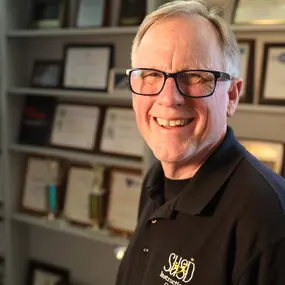
Speaker / author / consultant / retired educator
Don Bott was an educator for 41 years before retiring in 2026. He taught English and advised publications at Stagg High School in Stockton, CA. He always believed in the potential of his students, challenging them with high level texts, assigning to them the responsibility of running class discussions and offering them real-world learning experiences. He earned many honors over the course of his career including San Joaquin County Teacher of the Year and National High School Newspaper Teacher of the Year. He has presented on a wide range of educational topics over the years across 10 states, and recently he published the inspirational collection, "40 Years, 40 Stories: Lessons for Educators in their First or Final Year or Anytime in Between." In his final years he worked as an instructional coach, where he could help young teachers find purpose in this most important career. His most recent presentation topics have centered around the power of optimism and how to retain teachers in today's world.