Episode 77: Teach Like a Pirate
Keywords
education, teaching strategies, teach like a pirate, teacher branding, student engagement, professional development, educational technology, AI literacy, teacher empowerment.
Key Topics
The origin of 'Teach Like a Pirate'
Branding and marketing in education
Fostering creativity and engagement
International education insights
The role of AI literacy in teaching
In this episode of Under the Hat, educator and author Dave Burgess shares his journey from classroom teacher to renowned speaker and author. Discover his innovative 'teach like a pirate' approach, the power of branding in education, and insights on fostering creativity and engagement among teachers and students alike.
Want to learn from Dave? Here are the links:
Steve, M.Ed. (00:23)
Hey friends, welcome back to under the hat. We are super pumped to be here I am Steve Martinez your co-host and as always I'm joined by
Sophie, M.Ed. (00:33)
Hi Steve, how are you this morning?
Steve, M.Ed. (00:36)
I'm well, I have to share that like right now something that has been on my mind, ⁓ just working with all of my pre-service teachers is right now we're in testing season. And so they're asking for a lot of guidance. ⁓ You know me, Sophie, part of me is like, well, a test is dumb. But like I just, you know, trying to help them along the way of like, what does that look like? State testing. My daughter Riley is experiencing state testing for the first time. ⁓
Sophie, M.Ed. (01:05)
first time.
Steve, M.Ed. (01:07)
as a third grader and I'm seen for the first time as a parent perspective, like parent perspective here of like, wow, that's the amount of stress that we put our children through with that. just seeing her teacher and her school navigate all that has been interesting. Sophie, what did you do like with all this? Because I didn't really deal with state testing in the classroom, just the way that my state was built with social studies. But what are some words of wisdom?
that you can share for those that are dealing with that right now.
Sophie, M.Ed. (01:40)
was in the unique and I think maybe easier situation where I was middle school math. So they're not as nervous about the test anymore. And some of you have the wide spectrum of like, I'm just going to click through and move on and I'm going to spend hours and hours and hours on doing this because it's going to be perfect. Kids like wide range. But I did try to tell, make sure that every single child knew that this test is just one piece of them.
not the whole picture of them to do the best that they can. And that's all that if they actually do the best that they can, then I'm going to be proud of them. ⁓ And it was definitely different depending on who they took a test with. like if they were taking the math test, I wanted to be the one proctoring it because they behaved differently for me in math than they did for the English teacher in math type of thing. And so same thing, if they were taking the English portion, they would do differently for me than they would their English teacher. So
Steve, M.Ed. (02:27)
⁓
Sophie, M.Ed. (02:39)
I actually helped arrange some state testing schedules once and to make sure that things happened in a certain way to be smooth and make sure everyone had connected Wi-Fi or connected internet instead of just Wi-Fi to make sure everything like nothing. Nobody has to do extra paperwork type of thing because state testing can be stressful on the teacher to make sure you're compliant with everything. But yeah, that.
Steve, M.Ed. (02:58)
Mm-hmm.
Yeah.
Sophie, M.Ed. (03:08)
The middle school kids are just a little bit different than like third graders doing it for the very first time.
Steve, M.Ed. (03:15)
Yeah, no, they'd be nervous. They'd be nervous. But yeah, so that's ⁓ what's tough of mind for me right now. Sophie, how are you?
Sophie, M.Ed. (03:24)
What's top of mind for us today is ⁓ our guest. I first crossed paths with Dave during his keynote at the West Virginia Statewide Tech Conference, and honestly, the room hasn't stopped shaking since. As a former history teacher and avid runner, he brings a level of relentless energy and genuine passion to the stage that is truly unmatched in this industry.
Beyond the high voltage presentations, Dave Burgess is a New York Times bestselling author and the president of Dave Burgess Consulting, Incorporated, where he supports a massive community of innovative educators through over 200 published titles. He's currently holding down the fort in Vancouver, Washington, alongside Kona the dog and Raven the cat. Dave, for the few listeners who might not be familiar with your work yet, could you walk us through your educational journey?
Dave Burgess (04:16)
Yeah, for sure. First of all, thank you so much for having me on the show. ⁓ And for those that heard the avid runner piece, I would like to add that a very slow and avid runner too. like don't expect that I'm going to be any race, like I'm going to be racing anybody or anything like that. I'm very slow, but I get out there. I get out there anyway. ⁓ Yeah. So my educational journey, I tell people that my gateway drug into education was as a basketball, I started as a basketball coach. So.
Steve, M.Ed. (04:27)
Hahaha
Dave Burgess (04:45)
I did not have a teaching credential and ⁓ was out of college. went to UC Davis, majored in psychology. I had no idea what I wanted to do with that. It was just the major that I found that it had the most interesting class titles and the least amount of math. ⁓ so that's what it was. And then I saw a basketball coaching job at a high school in the paper.
Steve, M.Ed. (05:04)
guys.
Dave Burgess (05:13)
⁓ and applied for it and got hired. love working with the kids so much, during the, during that experience that I went back to night school and got a teacher credential and started to teach at the school during the days too. So that was kind of the start of my journey. fact, basketball coaching, ⁓ my, my first job as a human being, I worked for three summers for John Wooden at the John Wooden basketball camps in thousand Oaks, California. And so at a really formative time in my life, I worked three consecutive summers.
week after week for John Wooden at those basketball camps, got to see him do his period of success week after week and got to see him work with the kids and work with us. And yeah, so that was a really formative thing for me. And then the first job in the school system was that basketball coaching job too. So that's where it all started. Social studies teacher, mainly US history. And then well into my teaching career is when...
I did my first session, which I happened to title, Outrageous Teaching, teaching subtitled, teaching like a pirate.
Sophie, M.Ed. (06:21)
teaching like a pirate. Yes.
Steve, M.Ed. (06:21)
And it stuck.
Dave Burgess (06:23)
And
it's stuck.
Steve, M.Ed. (06:28)
When that happened, you, was it, ⁓ because it's like one of those things where like your first shot, no pun intended because of the basket. Anyway, but like, did you have full intention of like, that's going to be my brand, that's giving me my thing? Or was that not even on your mind?
Dave Burgess (06:45)
⁓ So how far it went was certainly not on my mind, but it was something that like, ⁓ so I signed up to do a full day workshop for the peers in my district. was a district summer Institute, right? A full day workshop for my peers. I had never done a session before. Like I was not smart. I did not choose a one hour session. I sent them to a full day, right? And I drove away from that and go like, like what have I just done?
Steve, M.Ed. (07:00)
Mm.
Dave Burgess (07:12)
Like I don't have a workshop. don't have this written down anyway. And so at that point, I got relentless about writing down everything I did in my classroom that I thought was successful. But then that wasn't good enough because that's what I do. I had to a step back further and try to come up with where do these ideas come from to begin with. And every time I traced back, it came back to the same thing. It was question, a question that I was asking about my class that maybe other people weren't asking about their classes. And so I began to compile those questions one after another. So eventually I had 170 of those questions.
which I organized into 30 different categories, which eventually became the hooks, right? But I had a problem, a big problem. ⁓ And it's this, if you write up a workshop description that says that you're gonna teach teachers how to create a wildly and outrageously engaging classroom that has students knocking down the walls to get in, you better have a pretty damn good workshop. Like if you're gonna build, if you're gonna build yourself as the engagement person, like.
Sophie, M.Ed. (08:03)
Yeah.
Dave Burgess (08:07)
you better have a pretty engaging workshop, right? That's a lot of pressure. And so I wanted to create something like a brand. I wanted teachers to be able to experience what it was like to ⁓ these ideas. As my students experience it, I wanted them to experience it in my workshop as if they were the students, right? And so I tried to think about how I could do this and Pirates appealed to me because Pirates are... ⁓
Pirates are willing to sail into uncharted waters with no guarantee of success. They're risk takers, they're rebels, they're mavericks, right? And so I wanted to embrace that spirit of being a pirate. So I always tell people, if you will say, what does this teach like a pirate thing? It's got nothing to with the dictionary definition. Like I don't want teachers to go out and rob and attack ships or anything like that, right? It's got to do with the spirit of the pirate and embracing that. And then if you think about it, pirates are also known for having hooks. And this was about how you could hook students and draw them almost magically or magnetically into what you're doing in the classroom.
And then I'm abnormally obsessed with acronyms. And so one of the first things I did is I just turned a page sideways. I wrote P-I-R-A-T-E down the page. I tried to generate an acronym. I still have that paper, by the way, with all the different possibilities. ⁓ And I knew I wanted to talk about passion and enthusiasm. They're the P and the E. We're sitting in the beginning and the end of the word, like the cornerstones of it. And I knew I wanted to talk about building rapport with students as being sort of the heart of teaching. They're the R, we're sitting in the center. And so I never looked back.
It gave me an opportunity to be able to set up my space, you know, like using pirate themes. It gave me an opportunity to demonstrate the guest speak, what I call the guest speaker hook or the costume hook. Like I could actually physically transform into something like it with the pirate stuff and gave me all these plays on words with the hooks and hooking students in. And so that's kind of where it all started. And then it kind of exploded and I never looked back.
Steve, M.Ed. (09:55)
Hmm. And how many? Yeah, yeah.
Sophie, M.Ed. (09:57)
It works. It definitely
works. Sorry, Steve.
Steve, M.Ed. (10:03)
Yeah, no, no, no, no. So were you like 10 years into the profession when you led this first workshop? how season were you in the classroom at that
Dave Burgess (10:15)
Yeah, no, I would say more than 10 years even into it. so interest in the I'll tell you an interesting part of it. So after I did that workshop that summer, like, it was like, the reaction to it was larger than I had ever expected. And somehow I'm going to get in, I got to get in front of this message in front of people. And so I began to, I did, there was no book at this point, right? So I began to submit conference proposals all over the nation, like of any conference in any state.
Steve, M.Ed. (10:17)
Okay.
Dave Burgess (10:43)
said, yeah, you can come do your pirate thing here. Like I got a plane ticket. I flew there. I bought a conference registration at that point in my career, right? And I just went and did my thing. And nobody knew who I was. ⁓ Like I said, there was no book. just had done it one time in San Diego at my school district, right? So nobody knew who I was. Now, if you think about this, mean, looking back on it, of course it all worked. But like, if you think about it, this is kind of crazy. Like I was literally walking around education conferences dressed like a pirate, right?
Steve, M.Ed. (10:51)
Mm-hmm.
You
Dave Burgess (11:13)
Nobody knew,
nobody knew why, like nobody knew who was, right? And so, and then like I was walking up and down the halls of these conferences, dressed like a pirate. And like I wrote up my session description description to make it sound like you're going to Disneyland. Like, you you read through some of these conference programs. A lot of the sessions sound like you're going to the dentist office to be drilled, right? Like it might sound like you're going to Disneyland. And then I walked around and recruited people. Like I would just go to the, like the registration table area and like make a scene. Cause like, of course I'm a six five pirate, right?
And so, and then people would be looking through their program trying to decide where to go. And I would just go by, yeah, I hear there's gonna be a pirate in room 18 at 10 o'clock, right? And they would turn around see this big giant pirate walk by. And then I had like, I allowed pirate music playing out of my room, my session room. And I had a sign up in the front. I didn't even have a computer that I presented with this point. I just wrote with marker pens on a phone board. I wrote the number one top secret way to become a better lover.
and I propped it up in the front of my room, which eventually became my opening slide still to this day, right? But like, I just had it on a foam board sitting in the front of my room. And then I stood out in the hallway like a carnival caller. I was just like, like, hey, you don't want to go to that session. This one's no better. Come on over here. Hey, you read the sign. You need this stuff. Come on, get in here. Right. And we would just pack these people into these rooms and they'd be lining the walls. They'd be sitting on the floor in the aisles. And like, I'm, we broke fire code after fire code. Cause at that point in my career, like I was not in the keynote space.
Like when Sophie saw me, was in the Kino space. And that's where a lot of people have seen me, right? But no, at this point, I was just in one of those little session rooms. like, ⁓ and so we just jam people in there. And then I would get up and like do the whole, the whole thing with all the energy and demonstrate the hooks and all that. And then like just started to just build and and grow and bigger and bigger. But ⁓ it wasn't until
People always talk to me like when because I published books right there like I want to publish a book and then maybe I'll go speak some like no no no no no no like speak first. See if your message even resonates with people like hone your message, craft your message. The book is printed on paper. It's permanent. Like your workshop can change. I get in front of a real authentic audience first and do these ideas and try things.
Steve, M.Ed. (13:10)
Mmm.
Dave Burgess (13:22)
and then see what happens. See what people talk to you about afterwards that they want more information on. See what slide that you put up that people take a picture of and like, Ooh, like see what your social media feed looks like after what parts resonated with people, you know? And so I spoke for over, I think it was like six years. I traveled and did the workshop before I wrote the book was six years after that first workshop that the book came out.
And so people say, oh my God, this was like this overnight success. All of a sudden this pirate book exploded on the scene. I had been speaking about that subject for six years before the book even came out.
Steve, M.Ed. (14:05)
I love how as you're describing the amount of effort that you put in, like the energy, the thematic themes, Like the way you describe it all, the first thing I thought of, was like, that reminds me of the effort that I put in, but for kids. And it's you taking that same thing, but what we don't always do is put that same effort into with the adults.
Right with the teachers and I just love that piece of it and I think that's like a good reminder for any leader Right, like whether it's education or not, like how do we put that same kind of energy that we expect to? Infuse into our children How do we do it for our adults because the moment that they're adults the moment that they're not children anymore That energy that effort. It's like you figured out you're an adult now, but it doesn't mean that adults don't deserve
Sophie, M.Ed. (14:51)
Adults.
Steve, M.Ed. (15:03)
that kind of love, attention and effort.
Dave Burgess (15:06)
Y'all 100%, yeah. ⁓
Sophie, M.Ed. (15:06)
the same passion and engagement needs to be presented
for us adults too.
Dave Burgess (15:12)
I was relentless. if you, like ⁓ I'm, I'll say maybe less than relentless now, but like at that time, like if you said something about my book, like online, like I replied to you so fast that you thought that maybe I was looking over your shoulder. Like it was almost creepy. like, you know, like say, I'm reading the book teaching like, I won't thank you for reading. I was like right in there. And then you would just like picture them looking at their phone going like, like what, what, what just happened? Like, how did this guy know that I just tweeted that? Right.
Like, mean, was, and I was all over the place at these conferences. like, you know, ⁓ sometimes this is another thing that sometimes people will say to me is like, can't understand. can't, no one will pay me to speak. They can like, do you know how many free things I did before people started paying me to speak? Like I was, you know, ⁓ go do sessions, go to go submit something to the, your, local conference, go sit, the state conference, the, ⁓ present in your district, go.
try to get into a national conference stage and just as a session, just go out there and get your message in front of people and put in the work. And ⁓ if it resonates, then good things will happen.
Steve, M.Ed. (16:17)
Mm.
Yeah.
Sophie, M.Ed. (16:25)
And I love that it has like this whole theme that people will remember. Like you're the pirate guy, you're the pirate guy. They might not remember what the acronym all stands for, but they remember the theme of it and how you made them feel during the session. I remember walking away and being like, I have ADHD and I was engaged the entire time. So during a keynote and there have been many sessions and keynotes where I've been like checking my email and doing other things because I just wasn't.
engaged, but you were running around the room and had rope thrown down the aisle and the ⁓ opening slide of the best way to be a better lover. I'm like, wait a second, I thought we were talking about pirates today type of thing. yeah, so was definitely something that I is like burned in my brain. I say with Steve sometimes it's burned in my brain. I remember that experience and
Steve, M.Ed. (17:01)
you
Sophie, M.Ed. (17:25)
I've presented on a few random things here and there at conferences and I always try to make sure that the audience is involved in some way, or form. And one of the reasons is because I don't want them to do what I do in other sessions and just like not often go somewhere else and not be engaged in the presentation. ⁓
Dave Burgess (17:49)
Yeah, I mean, the energy is, admittedly, it's over the top. I mean, it's like the drama and the intensity of it is absolutely over the top. It's ⁓ almost like a caricature of someone who is ⁓ intense and wildly engaged. It's like a...
I sometimes laugh at myself. If I see clips of myself, I just like, ⁓ my God, are you kidding me? Like, what is that? Like, just almost cringe when I see myself present sometimes because it's just like, ⁓ wow, like why did I do that so dramatically? You know, it's like this, like I have this one part where I just say like, it's two things wrapped inside of one. Do I say two things wrapped inside? No, like I jumped down into a stance and go like two things wrapped inside of one. You know, it's kind of this like.
Steve, M.Ed. (18:22)
You
Dave Burgess (18:44)
Why did I just say it like that? Why did I go, rrrraaahhh? But it's like, guess it does work, And it's hard to look away from, right? Because it's just like, whoa, what is this guy? This guy's going crazy, right? Yeah. And the speed of delivery, is a part of it. It's like you really have no ability to.
Sophie, M.Ed. (18:48)
Yes
It does.
What is he gonna do next?
Dave Burgess (19:09)
not focus on anything else because the rate of delivery is so fast that you can't be, like if you're distracted, you've lost five sentences, right? It's like, it's just like, it's almost, it's like, you know, it's a show, right? And the pirate thing was important actually, if you think about it, you mentioned something that was super important is, if you think about a session, if it was like the top 10 ways to be more engaging and I'm up there and I'm standing in a...
regular suit and I'm reading down my PowerPoint slides. You walk away from that thing and it might be a great session, but what are you ever going to say to someone about that or remember it or like if you don't know the name, but like nobody walked away from my presentation at any point during that early development stage without being able to very clearly communicate what they saw. They just like walk with like, Hey, have you seen the pirate guy? Like he's presenting again tomorrow. You got to go see the pirate guy. Like they might not even know my name, but they knew like
go find that guy who's dressed like a pirate, like go that guy's session, right? So it was very easy to, ideas ⁓ to be effective, sometimes you have to package them in such a way that they're easy to spread. And so ⁓ the branding of it made it very easy to spread and very easy to describe to people. It also made it so when I would show up at schools and districts and things like that, they had a very easy path to ⁓ like theme their event.
Sophie, M.Ed. (20:16)
Bye.
Dave Burgess (20:32)
I could go to lots of schools and lots of districts. They theme their whole event around it. People are dressed up like pirates. People have pirate stuff on the table. They have chocolate coins that they're giving out as snacks. have like, you know, like the, it all kind of played together to make it very easy to spread and kind of fun.
Steve, M.Ed. (20:47)
Mm-hmm. It's easy to remember and it's easy to explain. The pirate guy, right? if... Yeah.
Dave Burgess (20:51)
Yeah, yeah, the pirate guy, that's all you have to say. And you're like, yeah, I remember that.
yeah, I've seen the pirate guy.
Steve, M.Ed. (20:59)
Yeah, yeah, it's even it's even easier to compare to like, that's the person that's the blended learning person. Those are already a lot of words, right? And you're like pirate. Boom. That's Dave.
Dave Burgess (21:10)
Yeah. Yeah. And it's
like if you think about it too as a marketing, so like a marketing entrepreneurial side of it is if you are student empowerment, or the culture speaker or whatever, there's a hundred of them, right? It's like, oh, hey, we need to get an engagement person in here. Well, there's a hundred of them. You want to get the EdTech person, there's 10,000 of them.
Steve, M.Ed. (21:39)
Mm.
Dave Burgess (21:39)
Right.
⁓ But what if you want to get that pirate thing? There's only one. And so like the when you're when you're. Negotiating fees and things like that, like they have no other option if that's what they're looking for, if they want the they want the pirate stuff, then it's like. It's me or it's nobody. This is what it costs. So it's like a there's that side of it as well from a more business side of the.
Steve, M.Ed. (22:10)
Well, and then from a business standpoint too, like what you've done is you've not positioned yourself or blocked yourself in rather to like one thing, right? Where like some folks, I've seen some folks who are like when they are speaking, they're speaking on one topic. ⁓ I won't name any names, but like I just know some people that are like, they're only speaking on micro bits or they're only speaking on project-based learning.
Right. And what you've done, like the, just the concept, the thing that you have and the branding that you have. Yeah. It's like teach like a pirate, but Dave, I know that you're teaching on a wide range of different strategies and topics. Right. And so you, from the way you sell yourself, it's like, yeah. You, you need all these things. I can provide it to you, but I do it in such an engaging way. ⁓ I think it's super smart.
Dave Burgess (23:05)
Yeah.
Thank you.
Sophie, M.Ed. (23:09)
Steve reminded me when he was chatting the strategies that you use and the one that I remember the most that is like the most dominant one in your session is like the question. The questions you ask yourself. They're like and it was, what was it? It was like, you're so creative. I can't do that. I remember that. talk to us about that. Yeah.
Dave Burgess (23:28)
Yeah, yeah, the six word, yeah. Yeah,
so that's a very common thing which you two have probably experienced in some form. Lots of people have experienced in some form where someone says to you, I call it the six words. It's easy for you, you're creative, okay? And there's some really sinister things in that statement, right? First of all, they're saying, it's easy for you.
They're assuming that it's easy for you. Like if you knew like, what, it's easy for me? Like what? So in four words, they've dismissed like 17 years of hard work, 17 years of brainstorm, 17 years of filling notebook after notebook of ideas, most of which didn't work, right? That blew up in my face, like 17 years in order to develop the ideas behind the class that I taught in high school, right? And so like it's easy for you to...
Sophie, M.Ed. (24:08)
You
Dave Burgess (24:24)
What do you mean? The same thing was true of ⁓ Ed Tech. You hear this in Ed Tech too, it's easy for you, you're good at tech. Well, what do you think that person did to be good at tech? Like, they worked their butt off is what they did to be good at tech. They screwed up over and over again. They clicked on stuff and messed things up and experimented and tried things over and over again and had like, yeah.
That's how they're good at ed tech. not, they didn't, they weren't born good at ed tech. They're good at ed tech because they spend so much time working with ed tech, right? And that was the same thing was true with me. Like, what do you mean it's easy for me to come up with these ideas? Like, do you know how hard I work to come up with these ideas? And so there's that, but then there's that other part of that statement too. You're creative. Well, what are they implying by that? And by the way, this is where it comes from. They're implying two things wrapped inside of one. First, that creativity is just something you have or you don't have.
Steve, M.Ed. (25:00)
Mm.
Dave Burgess (25:16)
Therefore, you you bear no responsibility in the matter, right? And two, ⁓ they're just not, they're just not creative. So thereby excusing themselves, putting in the hard work that you put in, excusing themselves for the fact that students aren't learning up their potential in their room, excusing them for the fact that their class sucks, right? Excusing them with the fact that students leave their class with less of a love of learning rather than more of love of learning, which is what we're shooting for. It's not okay. It's not okay, right? And so,
It's like this idea that creativity, I call it the myth of the blinding flash of light, that some people are creative and other people design. Like that's just not the way creativity works. Like if people don't, they're creative, just don't walk down the street like this. Oh, there's a great idea. Oh, there's another one. I just got an idea. That's not the way they create it. There's a process to creativity. You can become more creative by engaging actively in the creative process, which goes to those questions and all those things that you ask.
And so you can take a group of teachers to say, look, I'm not very creative. Give them a creative set of questions and you'll see them flourish. And so, ⁓ but a lot of people have this belief, ⁓ this kind of self fulfilling prophecy of failure that they're just not creative. So they don't even bother to engage in the process.
Steve, M.Ed. (26:34)
Yeah. And you're right. I have seen that like yesterday. Like it happens.
Dave Burgess (26:40)
Yeah,
it's common.
Steve, M.Ed. (26:43)
Yeah, ⁓ and it's something that like, you know, they say if you don't use it, you lose it. So that's kind of the other piece too. We're like, I'm not creative, but they may have more than likely they've had creative moments, but they don't exercise that. And to me, that is like, what is a leader doing to help foster that environment? Right? Kind of like getting to your whole build of like, okay, what are the types of questions that you're asking and how are you?
Dave Burgess (26:57)
Yes.
Steve, M.Ed. (27:12)
exercising that creative muscle. Yeah.
Dave Burgess (27:14)
Yeah.
It goes to this story. I wish I knew the attribution for this, but there was a... And this could be one of those apocryphal stories that was made up, I still love it either way, where there was this famous, I think it was a ⁓ violinist who had done this concert in front of this huge audience and it was just spectacular, like one of the top in the world.
And the person came up after the show to meet the musician and said, like, I would give my life to play like you. And the musician just looked at him and said, I did. You know, it's like the, that's the, that's the people say, man, like I would do anything to be as creative as you. I would like give my life to be as accurate. Like I did. That's what I did with my life.
Right. And so like, that's kind of, uh, you know, same thing with any, anyone who is proficient at anything, you see the top of the, you see like the what's peaking out of the water, like the top of the iceberg, right? Like a, uh, an athlete, you know, like, Oh man, I wish I could be in the NBA. Like you're seeing like this little thing, what you don't see is the years of hard work and training and what they did when nobody was, uh, nobody was around how many hours they would like spin out at, uh,
Sophie, M.Ed. (28:22)
Mm-hmm.
Dave Burgess (28:41)
shooting and running up running sprints up hills. Like you know, you don't you don't see the work often that you just see the highly proficient person at the end.
Steve, M.Ed. (28:55)
Yeah, and I mean not to Go down the rabbit hole here because the other layer with that is like the ones that are deemed as the creatives The talented like those people that put in all this time all this effort They're the ones that are going to get used the most and I don't mean used in like a negative way, but like They're on the committees They're leading perhaps even like in more like a grassroots kind of way, right where?
You get a title change, but that's about it. And then, and then you, these are the individuals that are at risk of like burnout, right? Instead of trying to spread the creativity. And that's what your point kind of reminds me of.
Dave Burgess (29:38)
Well, and that's like, there's this, there's a old saying, if you want something done, give it to a busy person, which seems counterintuitive, right? You would say like, well, no, why don't you give it to someone who doesn't have anything on their plate? No, because the busy person is effective and efficient and knows how to get things done. So that's kind of goes to that, like the same thing at a school site, right? It's like you have all these things, it's the same people get tapped for over and over again. Why? Because
they're good at what they do and they know that whoever's gonna delegate that to them, they know what's gonna get done, right? So it does lead to overwhelm and burnout for your top people a lot of times.
Steve, M.Ed. (30:20)
Yeah. Yeah.
So talk to us a little bit about, so like you kind of, you did a dive into like you as a speaker, your brand, all that good work. So talk to us a little bit about like you getting into the book stuff, right? And it's quite impressive how much work you've done in that area. So what got you into that space and perhaps a little bit about your first book.
Dave Burgess (30:48)
Yeah, so what happened to me is I got offered a book contract. Someone came to see me speak in Washington DC, a publishing company, sat on my session. The session just like blew up. It was like they're like sitting there going like, what is happening in this session right now? And they came to me afterward. They gave me a little business card and said they wanted to meet me in the coffee shop. ⁓ And I went and met with them. They offered me a publishing contract on the spot. And I went straight up into my hotel room.
Steve, M.Ed. (30:55)
Mm.
Dave Burgess (31:18)
I always tell this story. This is exactly what happened. I was straight out of my hotel room and I Googled publishing contracts because when I read it, I thought they were trying to cheat me. Like I just couldn't believe it. Like to me, the only thing missing was a ski mask and a gun. I like when I read this thing. And so, and then I, after Googling publishing contracts, I found out they weren't trying to cheat me at all. That's what they look like. And like, and so I did a ton of research, realized it didn't need to be like that. Ended up, formed our own publishing company, published, teach like a pirate from a laptop at the kitchen table.
is where this book came out. I literally published it off the laptop at the kitchen table. And then we had the good fortune to have it go kind of go viral and explode, right? And so other people started to come to me and say like, hey, we don't want to sign these contracts either. How are you doing this? Like, we don't understand like how you're getting this book everywhere without a big publisher. So I would sit down and tell them everything I had done, but there were still things that were holding people back. So finally we decided it was time to disrupt the industry. Like whenever you see an industry that's based on an outdated model.
it means it's ripe for disruption. ⁓ And so, and like that's how some people feel about education right now, right? But like, so, but for me, the publishing industry was based on a really outdated model. ⁓ And so it needed to be disrupted. And so we started to sign people that I was running across on the speaking circuit. And then some of those books started to take off, right? You know, like the Innovators Mindset with George Kurose and Kids Deserve It, Adam Welcom and Todd Neslone, all the, like the Alice Keeler, ⁓
projects like the 50 things you can do with Google Classroom and like those early Alice Keeler books and Launch, AJ Giuliani and John Spencer ditched that textbook, Matt Miller, right? And so these books are to take off and then the whole thing kind of flipped and what was me kind of handpicking some people that I was running across became a situation where now like our inboxes flooded every week of manuscripts. It's not, I'm not complaining. It's a good problem, but you know, it is a problem. So now we have over
Steve, M.Ed. (32:51)
Mm-hmm.
you
Sophie, M.Ed. (32:58)
Mm-hmm.
Dave Burgess (33:15)
200, we just recently passed across the 200 title mark of books. And for me, it was kind of like this point, like sometimes people will say like, when are you going to write, teach like a, like basically teach like a pirate part two, right? And I'm, always tell them like, no, I told my story. I wrote my manifesto. And so now like where my energy is more focused on trying to amplify the messages of others and understanding like
This is another thing that happens to me a lot. People say like, hey, I noticed that you don't have a lot of ⁓ project-based learning in the book. Or I noticed that you don't, know, there's almost zero educational technology in your book. Like what's up with that? And all this. And ⁓ I tell them a couple things. tell them, first of all, you know why there's not much ed tech in there? Because I wasn't very good at it. This was a book that was written, I wanted it to be authentic. Like I wanted it to be, I didn't want to position myself as an ed tech expert. I'm not.
Right? And so I wrote about some things which I was doing effectively in my classroom, but it was never meant to be the encyclopedia of teaching. Like sometimes people, as this cracks me up, people are like, how come this isn't in the book? Like, what? I wasn't trying to write the Bible of teaching. I'm not trying to write the encyclopedia. Like, I wrote my story. And so, but my story is not the whole story. So I need to find other people who can contribute and flesh out that story.
Steve, M.Ed. (34:21)
Mmm.
Dave Burgess (34:41)
And so like I need to have a Matt Miller because he's so great at educational technology, right? I need to have a Paul Solars who wrote Learn Like a Pirate about student centered learning classrooms. And I need to have an Alice Keeler. I need to have like, so I need to find these people who are doing powerful things in their classrooms and help them spread their message as well. ⁓ I can still remember the early conversations with Matt Miller about he didn't have a book. He had seen me speak in Indiana.
Steve, M.Ed. (34:49)
Thank
Dave Burgess (35:10)
And he contacted me about, can remember the very, like the hotel room I was sitting in, in a conversation with Matt Miller. And he was telling me that he was trying to get his speaking to increase. And I told him, Matt, you got to write a book. Like you got to be the person that wrote the book on this stuff. You don't want to be just the, it's going to position, you're going to immediately be able to position yourself in a more expert space and get more, able to spread your message more than you can go.
Like you can only go so many places, but your book can go everywhere, right? And he's like, but he had this problem. His message was ditch that textbook. It was about ditching books, right? He's like, do you know how much grief I'm gonna get if the ditch that textbook guy has a book? Like puts a book. like, and I remember we had those conversations about that. yeah, you know what? There's gonna be some people that make fun of that, but that's all right. You still gotta write the book. And ⁓ yeah.
Steve, M.Ed. (35:43)
Mm.
Sophie, M.Ed. (35:55)
It's book.
Steve, M.Ed. (35:56)
Hahaha
Dave Burgess (36:09)
I love thinking back to how some of these connections ⁓ came together and ⁓ it's really fun to have worked with so many amazing educators.
Sophie, M.Ed. (36:12)
Thanks.
Steve, M.Ed. (36:19)
Yeah, no, that's that's such a It's that the the pain point that you're that you're solving here is something that I encounter in here often right because I hear like a ton of talent that's out there right or They're speaking right now or even they're more like they're doing a lot of good work at the district level Or at the county office level, right? ⁓ but they're like, I don't I don't know how to Put myself out there
I don't know how like I have something to tell. I they just they share all the roadblocks that you've you've called out already right and and so I do love that you are supporting folks in that way.
Dave Burgess (36:57)
Yeah.
That was one of the key things for for DBC and still to this day is that ⁓ kind of one of the unique things about what we did wasn't just on the contract side of it with these very author friendly contracts, ⁓ but it was also who can have a book and who can't have a book. And there was a lot of gatekeeping that was going on. And you had to have that big house publisher endorse you in order to have a book. And one of the things that I did
was really try to elevate the voice of practitioners. People who you wouldn't think maybe, you know, it wasn't the person that had all these ⁓ credentials and research studies and had been out of the classroom for 15 years and was at the university now. Like, it was classroom teachers. I was a classroom teacher when I wrote my book. I just wrote about what I was doing in my classroom. ⁓ Paul Solars, Learn Like a he was a classroom, he was a fifth grade teacher when he wrote his book.
Quinn Rawlins, Play Like a Pirate. He was a middle school teacher. Michael Matera with his gamification, Explore Like a Pirate. He was a middle school social studies teacher when he wrote that book. Still is, in fact, right? Quinn Rawlins still is in the classroom teaching. And same thing with the leadership books. I wasn't the person that had been studying leadership for 20 years. It was the person who was sitting in the principal's office that was writing the book.
And so it was really saying like, no, no, no, no. You, you as a practitioner, you who's in the classroom every day, Monday through Friday with students, you are the voice that we want to hear from. And you can have a book, even though maybe like the big house publishers don't make you feel like you can. Like you can have a book.
Steve, M.Ed. (38:47)
⁓ Yeah, no, and it's just it's that empowerment piece right of you know, making them feel that yeah, you can and you should right and and so I I love that ⁓ Dave I also see good Sophie
Sophie, M.Ed. (39:04)
Bye.
question about like are there any states or conferences that you still have on your bucket list?
Dave Burgess (39:13)
Okay, so this is an interesting question. So ⁓ I have been ⁓ international, right? I've been to lots of different countries to speak and I have been in most of the states, but there I have only, have done Teach Like a Pirate in 48 of the 50 states. So there are two states. So when you ask that immediately, actually there are two states that I haven't been to yet. I have not done Teach Like a Pirate in the state of Maine.
And I've not done Teach Like a Pirate in the state of Hawaii, even though I lived part-time in Hawaii for a while. But so you can't get much further apart than that, right? But so I'm missing Maine at the very, northeast, right? And I'm missing Hawaii all the way on the south.
Sophie, M.Ed. (39:54)
Yeah!
Steve, M.Ed. (40:05)
Well, I think Dave, you should do those in the same week. Let's knock it out.
Sophie, M.Ed. (40:08)
That sounds
Dave Burgess (40:08)
Yeah, yeah,
yeah, back to back. Maybe like a Monday, Tuesday. Yeah.
Sophie, M.Ed. (40:10)
awful!
talk about jet lag.
Uh-huh.
Steve, M.Ed. (40:18)
Yeah,
have you done like so what about like international stuff if you have you done anything international?
Dave Burgess (40:24)
Yeah, I've done a couple of places in Australia, ⁓ Brisbane and Sydney in Australia. I've done Singapore, Bermuda, many places in Canada, and I've done the UK. One of my favorite, ⁓ one of the craziest of all time was actually in the UK ⁓ where, mean, imagine, so I'm like, wrote a book as a classroom teacher. And then, you know, like I said, had the good fortune to have it kind of go viral.
And then here I am going to the UK. They had themed the conference around it. They had like the program, all that kind of stuff. They had a pirate ship stage. So I still have pictures of all this stuff. What had happened was there was an elementary school that they were associated with that was getting a pirate ship play structure installed on the playground. And it hadn't been installed yet, but they had it pulled together.
And so before it got installed at the school, they brought it to the event and installed it on the stage. And so I presented from a pirate ship stage thing and they had a plank that, so to get into, to get into the, uh, the session, the keynote session, everybody, and I would say probably about 85 to 90 % of these people in the UK were dressed as pirates in this event. Right. So, I mean, it's just surreal. Right. And they had like a little fiddler, playing out in the lobby.
Sophie, M.Ed. (41:38)
to walk the plank.
Dave Burgess (41:51)
And you had to walk, they had this big long board plank that everybody's single file walked into the vent, had to walk the plank to get inside. And it was all like these candle, like fake candle themed tables. like, I mean, looking back on the pictures and it's just like absolutely surreal that something like this could happen in another country, but yeah, it did. It was super fun.
Sophie, M.Ed. (42:18)
phenomenal.
Steve, M.Ed. (42:20)
So with those experiences I'm I've always been intrigued by like what education looks like in comparison to our system, right? ⁓ In your travels like have you like was there anything that you saw is like, ⁓ we're all dealing with X or What differences do we see like? well This sort of thing is really top of mind here, but not so much over here in the States. I'm just curious what
Dave Burgess (42:29)
Mm-hmm.
Steve, M.Ed. (42:48)
if you have any insight around that. ⁓
Dave Burgess (42:48)
Yeah, yeah, for sure. So
first of all, as traveling around the United States, I can tell you they were all dealing with the same stuff. Because people sometimes will say to me, ⁓ Wendy, is the director of operations and does my bookings and stuff like that, she'll say, hey, this school district, they really want to have a meeting with you before you show up to tell you some stuff. Or this school really wants to, the principal wants to talk to you, whatever. And so I'll have a little meeting with them over Zoom or something.
And they'll always say like, hey, before you get there, you know, before you get here, we just want you to know a couple of things because this is like super important. Like basically they're saying like, these are the reasons why we got to get this into your head right now because this place is different. And what will they tell me? The same thing that everybody else tells me, you know, it's like, Hey, just so you know, like we have some teachers that are feeling a little overwhelmed and you know, we have some really creative and innovative teachers, but we also have some teachers that are kind of stuck in their ways and kind of feeling a little apathetic about their
profession right now. And so like, there's gonna be a little resistance out there, because they've seen stuff before people come in here before. And it's like, they basically just go down the list of what everybody's doing with it all of education, right? You know, we have kids that are disengaged in class, I guess, like, really? Okay, let me write that. me write that down. I make sure I work that in like, know, like, ⁓ you might have some teachers that are resistant to doing something innovative and creative, like, okay.
Steve, M.Ed. (43:56)
Yeah.
Dave Burgess (44:12)
I'm gonna need to plan for that. No, that's what everybody's dealing with. Okay, so there's that, there's that. But the example I'll give you internationally, which maybe is a little bit amusing. I don't know if it's amusing or not, but I remember speaking in Singapore. And first of all, you can assume, if I am outside, if I am a wild and outrageous person for people to observe speaking at education conferences in the US,
Sophie, M.Ed. (44:14)
Yes.
Dave Burgess (44:40)
You can imagine what it was like in Singapore. Like these people were like, they had no idea what was happening, right? Like this, like when I was just going off, right? This was like, this is like, it was so far outside of the box for them. But this was the most interesting thing. They were very, very interested in the creativity and innovation. But what they couldn't understand was the focus on like the behavior, man, like this sense that
these being more engaging in class was gonna lead to much higher ⁓ student engagement and fewer behavior management issues. Cause I always say like an engaged student is rarely a behavior management issue, right? So like, it's like one of the best strategies of behavior management is to have engaging content and engaging lessons, okay? But to them, like they couldn't understand this focus because the last problem that they have was behavior management issues. Like no kid is popping off in class in Singapore.
Right? Like, that's not their problem. That's not their issue. You know, the idea that a student might talk back or like, or say some, you know, be disruptive in the classroom, like they couldn't even like hardly wrap their brain around that. Right. And so that was very much something that, you know, a cultural thing from their school system that like, that doesn't happen there. But, ⁓ but they were very interested in the of the getting students to tap into
be more creative and not just jump through the hoops of a very formalized ⁓ curriculum.
Steve, M.Ed. (46:17)
love that for them. That that, you know, I'm talking going back to like the behavior piece, right? Like, yeah.
Dave Burgess (46:19)
Yeah, I mean.
Sophie, M.Ed. (46:21)
Yeah, they have behavior piece.
Dave Burgess (46:23)
Yeah.
And you might imagine what would happen to a student who was disruptive in Singapore and you realize why maybe not too many of them are.
Sophie, M.Ed. (46:33)
Mmm.
Steve, M.Ed. (46:34)
Interesting, interesting.
Dave Burgess (46:35)
I also remember,
by the way, flying into Singapore and before we landed in the plane, ⁓ they said, hey, just so you know, ⁓ drug offenses in Singapore are punishable by death. if you have anything with you that maybe you shouldn't be having with you or planning to do something that maybe you shouldn't be doing, you might want to not bring it off the plane.
Steve, M.Ed. (46:59)
Bye.
Sophie, M.Ed. (47:00)
⁓
I was worried about bringing dirt into New Zealand. I can't imagine going to Singapore now. Apple into New Zealand.
Dave Burgess (47:07)
Yeah, also, gum
Steve, M.Ed. (47:08)
or an apple.
Dave Burgess (47:12)
is also a thing there too. Yeah, gum, can't chew gum there.
It's like part of the cleanliness of this because gum gets on the sidewalks things like that. it's just like, just, it's banned.
Steve, M.Ed. (47:19)
I
Sophie, M.Ed. (47:24)
Bye!
Steve, M.Ed. (47:26)
You know, I so Dave, I don't so I have to kind of just share my own take on that like going to Japan. I immediately was like, over here in the States, we gross. Like, like just like like just littering alone, right? Like this concept and they don't have like when you go to Tokyo, there's no public garbage cans.
Dave Burgess (47:40)
Yeah, yeah.
Sophie, M.Ed. (47:40)
This
Dave Burgess (47:44)
Yeah.
Steve, M.Ed. (47:51)
Like they've had it like there's like a little issue that they had with that. they took them all out to like everybody. If you have like street food, you put it in your bag and you take it home. Everyone does that.
Dave Burgess (47:59)
Yeah, dispose of
everyone's responsible to dispose their own track, which is like a reasonable assumption that you should do right there. But like, yeah, for us that we if there was no cans, it would just be can you just imagine what it would look like? Right. So that's like a cultural. The other thing I loved about track like so Singapore also went to like Kuala Lumpur over there on that same trip. And the ⁓ the the multicultural it's just so wonderful. Like you see in one
Steve, M.Ed. (48:12)
Right.
Dave Burgess (48:29)
like walk to go get something to eat. You see all these cultures mixing together and the interplay and it's just like so normal and natural ⁓ that you don't necessarily see here all the time. And like, I remember just being, taking a taxi ride and was talking to the driver, speaks five languages. Like it's so common for us that like if someone's bilingual, we're like blown away. We're like, what?
Steve, M.Ed. (48:51)
Mm.
Dave Burgess (48:58)
You speak two languages? That's incredible. Their two languages would be like, everyone is multilingual. It's just ⁓ like the taxi driver speaks five languages. Like, are you kidding? It wasn't unusual. Everyone speaks two, three, four languages. It's interesting how that's just not a thing here.
Steve, M.Ed. (49:07)
Mm-hmm.
And
sometimes we can't even speak one.
Dave Burgess (49:21)
Sometimes we struggle with one, right? Yeah.
Steve, M.Ed. (49:24)
Yeah. Dave, just going through all your stuff here. If you wouldn't mind sharing, we're coming close to the end of the hour. Your podcast. So talks a little bit about that. Kind of the format of the show, kind of the stuff you're doing with it.
Dave Burgess (49:41)
Yeah, so the day Burgess show, you can find it. think there's 77 episodes up there now. I go through some long stretches without an episode, but trying to get better at that. But yeah, so it goes back and forth. There's kind of ⁓ long form interviews with educators. And then also some solo episodes that are shorter, more in that like say eight to 15 minute range where it's me just kind of ranting on a subject or a topic or telling some crazy story from my life and then trying to draw some sort of significant point out of it.
⁓ Most of it, most of the stories are self-deprecating because I just am so ridiculous. ⁓ And so I tell some crazy story about me misunderstanding something and try to like draw some lesson out of it. Yeah. So that's the Dave Burdus show.
Steve, M.Ed. (50:28)
Nice, love that. A lot of familiar names up in here. Yeah, love that. All right, so Dave, we're coming up towards the end here. And so we are going to ask you, we ask everybody on the show, what is top of mind for you in education? What's under the hat for you?
Dave Burgess (50:52)
So I'll tell you, this is gonna sound strangely like a sales pitch. I don't mean it to, but top of the hat for me right now is just put out a book ⁓ in collaboration with Matt Miller, which we talked about AI literacy in any class. And so I'm getting lots and lots of questions and comments about AI and where does AI fit into everything? Where does AI fit into the teach like a pirate message? Where is it? Like, how can I address this in my classroom?
Should we be like using it, not using it? And I really think that Matt Miller is a very level headed source of looking at AI and AI literacy as not some separate subject, but as being able to be something that's embedded into everything that we do and tying into the kind of stuff that we want kids to know about and learn about anyway. Like we want kids to be able to evaluate sources. Like that's not new that we would, that we want kids to evaluate sources.
want kids to be able to tap into a wide array of resources. That's not new. Like all these issues and discussions around AI can be discussed and embedded into the kind of things which are just helping kids become better thinkers. And it doesn't have to be this separate segmented off topic that I think too many people try to make it into.
Steve, M.Ed. (52:12)
or the enemy, the thing that's going to take away inquiry, let's say, right? Or creativity.
Dave Burgess (52:15)
or the enemy. Yeah.
Right.
Right. And I think it's this. ⁓ So it's the inevitability of it like the cat is out of the bag. Right. And so it is going to it is inevitably a part of our students life now and will be increasingly so in the future. I don't think there's any way to possibly argue that. So the question is do we want to have a seat at the table in helping shape how they think about AI how they use AI.
Sophie, M.Ed. (52:33)
Yeah.
Dave Burgess (52:51)
AI, ⁓ or do we want to abdicate that role and put our heads in the sand? And so I think in general in education, should, in all these important topics, we should want to have a seat at the table and not abdicate that role.
Sophie, M.Ed. (53:10)
Agree.
Steve, M.Ed. (53:12)
Love that. Yeah. Well, Dave, this has been fun. ⁓ For those that are watching, listening, ⁓ I can show this up here for those that are watching, DaveVirgis.com. So you can visit Dave's site, which has a lot of phenomenal stuff in it, ⁓ including a very enthusiastic photo of Dave, like, in the air, doing his thing.
Sophie, M.Ed. (53:13)
Mm.
Steve, M.Ed. (53:38)
So love that, love that. Well, Dave, this has been fun. Really appreciate you coming on.
Dave Burgess (53:44)
Hey, thank you so much for having me on show. This was fun. Got to talk about some stuff that I don't always get to talk about, so it was fun.
Steve, M.Ed. (53:50)
Awesome.
Sophie, M.Ed. (53:50)
Thanks so much, Dave.
Steve, M.Ed. (53:52)
Yeah. All right, friends, until next time, keep your hats on, put your minds open. Bye bye.
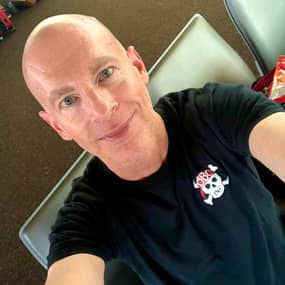
Author/Publisher
Dave is the NYT bestselling author of Teach Like a Pirate, a professional development speaker well-known for his outrageously energetic style, and the president of Dave Burgess Consulting, Inc. which publishes over 200 books from innovative educators from all over the world. He currently lives with Kona the dog and Raven the cat in Vancouver, WA.